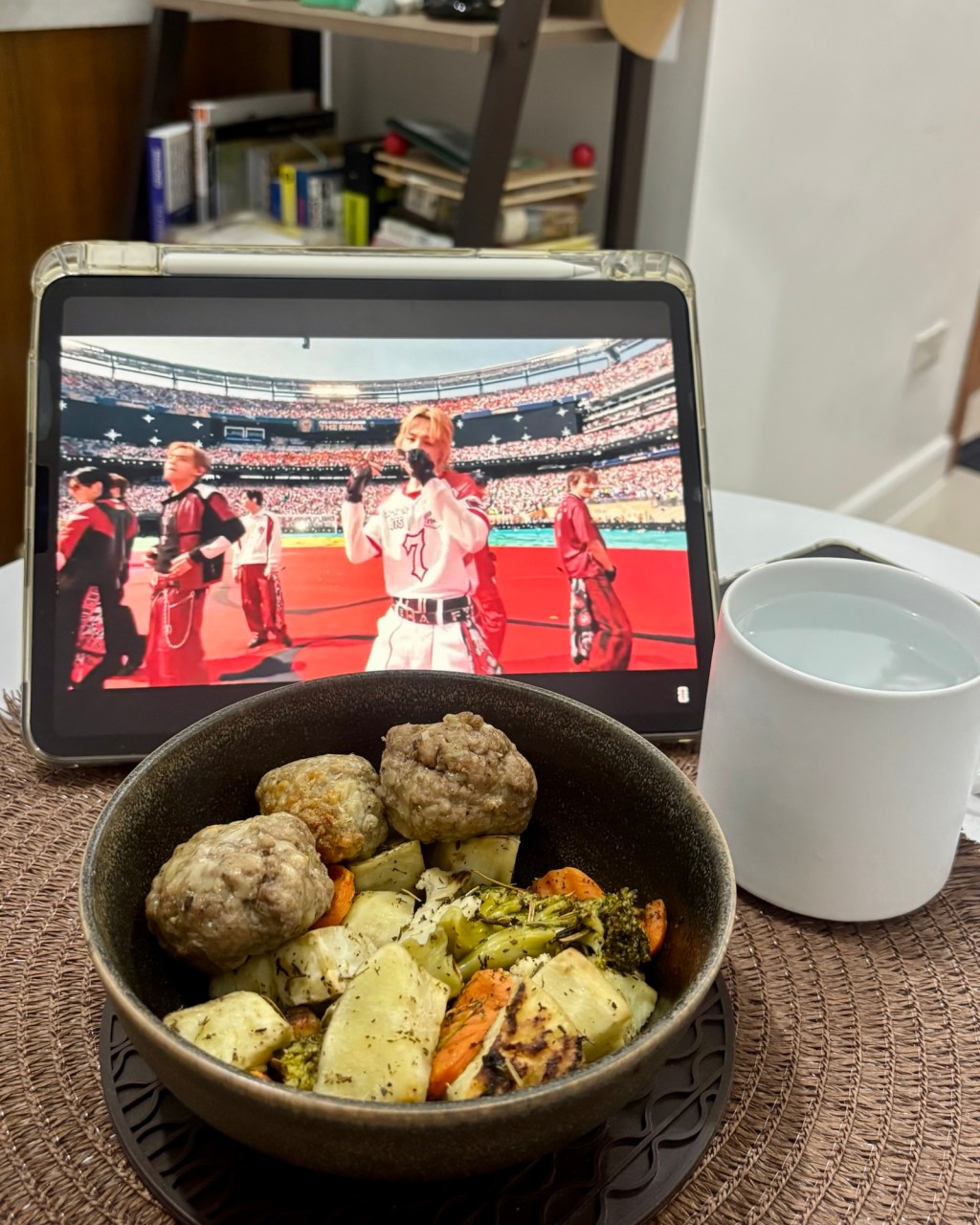
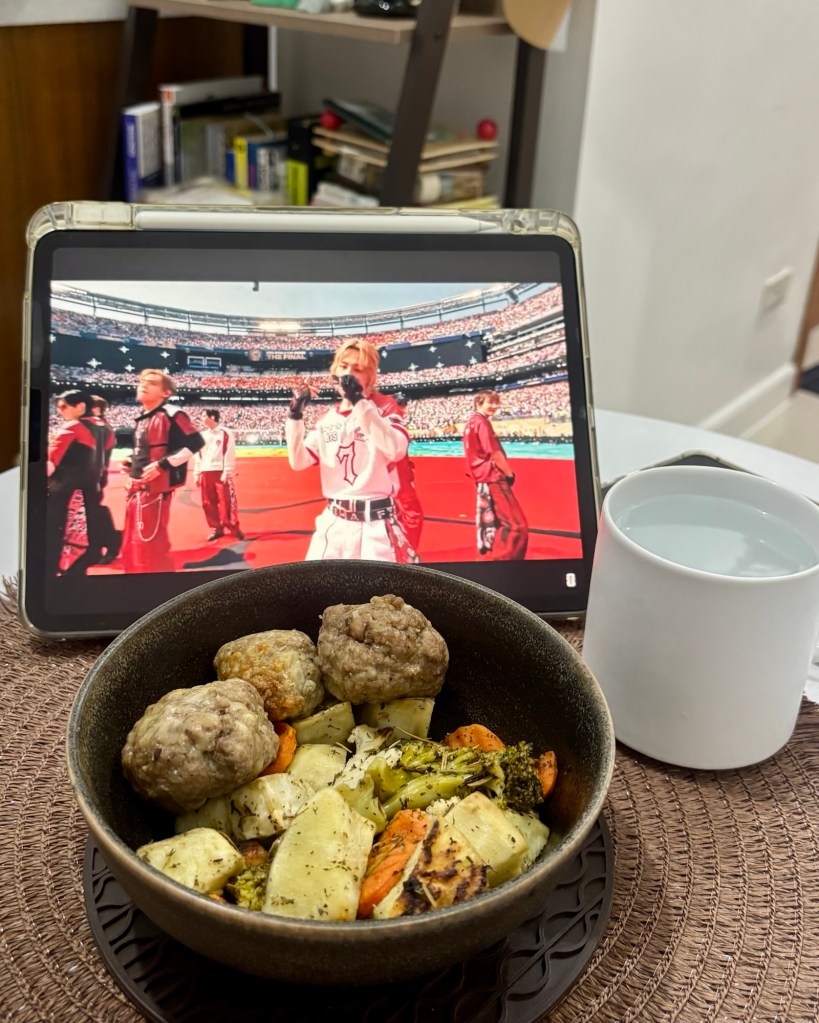
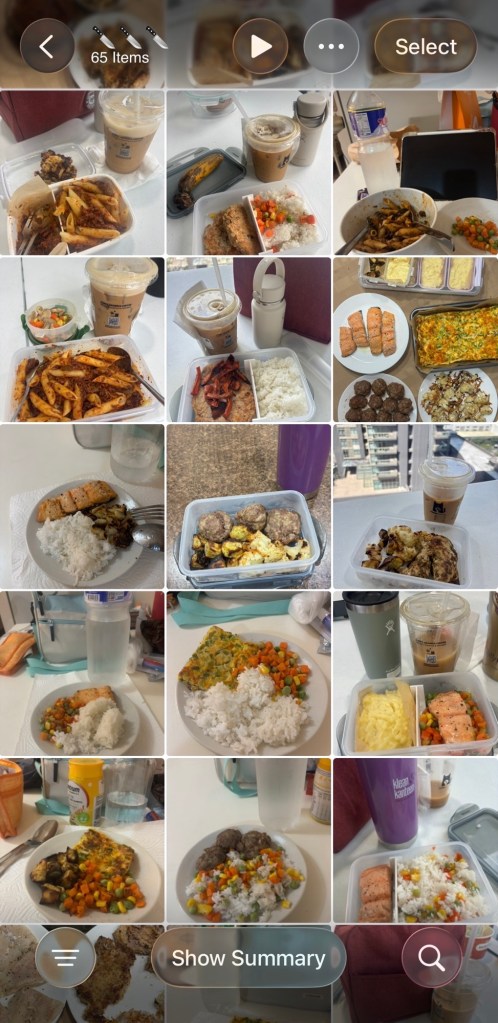
Another adulting post, this time on meal prep. I’ve been consistently batch cooking since February, so I’m sharing this post as a milestone.
Related post: Trentahin | Meal prep, gym days, and maintaining wellness in my 30s
.
Why I started meal prep
Bulk meal prep, or batch cooking, refers to the practice of preparing large batches of food ahead of time, dividing them into portions, and storing them in the fridge or freezer to eat later.
I can only think of three main reasons to start bulk meal prep, and they all apply in my case:
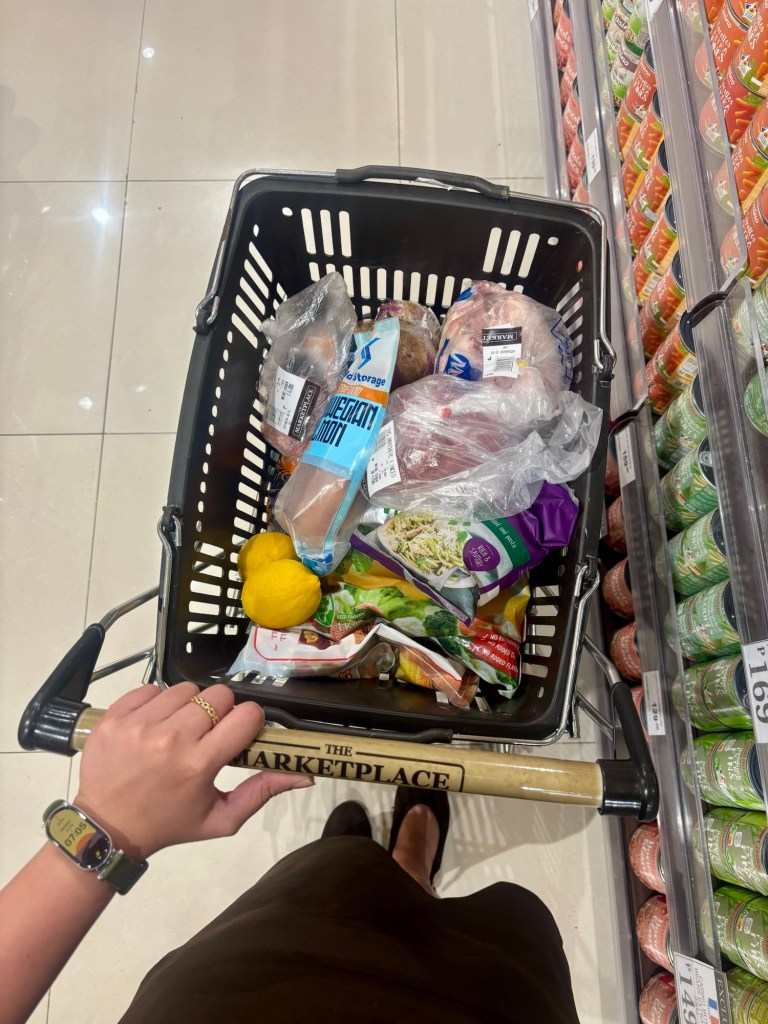
- Cost savings. Balanced meals ranging from 400 to 600 calories end up costing only Php 150 to Php 200 per serving. That’s a big discount from eating out (as meals now run at Php 150 to Php 200 minimum, without vegetables, and around Php 350 up for better meals in Makati/BGC). It’s a little more comparable to calorie-counted meal prep delivery services in the metro.
- Health benefits. I make sure to arrange food that’s (relatively) low salt, high fiber, and high protein –plant-based, chicken, or fish, as much as possible. I’m confident that I only use fresh ingredients and the good kind of oil. This level of confidence and joy from eating healthy meals is hard to come by, unless you go to grain bowl or salad places more regularly (which are again, expensive!)
- Convenience. Bulk meal prep means having pre-portioned food in the freezer or fridge, ready to be heated and consumed at any time. Preparation alleviates a lot of the mental energy and time drain associated with the daily “what will I eat tonight?”. After a long day making decisions at the clinic, that can be priceless.
.
Bonus: batch cooking reduces the environmental waste associated with meal delivery and take-out. If that matters to you.
.
Top 5 Pantry and Storage Purchases Worth the Money
My sister shared a trend going around TikTok or whatever social media about the top 5 purchases worth the money in so-and-so category, and it inspired me to write up this bit (meal prep version).
I bulk prep meals in my mom’s kitchen, but I store and reheat them in my condo unit’s kitchen, which takes up only two to three square meters. It’s a tight fit, so organizers and high-value tools are a must.
- Parchment Paper (50 MTR x 30 CM) – I bought 50 meters of grease-proof parchment paper years ago, and I’m still not done with the same roll. Parchment paper keeps things neat and easy to clean –specifically the oven and the air-fryer. They can also be used to enclose fish to steam, though we do have aluminum paper for that. And I also use it to portion out servings before sealing them in airtight containers for the fridge.
- Shirataki rice – Though our admin officer last year introduced me to Shirataki rice, I only tried it last month. A few times were enough to say I’ll never look back. Shirataki rice is a low-calorie (as in, 100 calories vs 200 calories white rice for a cup) and low-carb alternative made from konjac root. I buy the dried version which only requires hot water and 10 minutes to rehydrate.
- Canned tuna (especially ready-to-eat variants) – I’ve been a big fan of canned tuna since the pandemic, and we’ve always had some reliable Century Tuna in our house’ pantry. I’ve been recently obsessed with making 10-minute tuna rice bowls every other week (just mix canned tuna, 2 tbsp kewpie mayo, tsp of sesame oil, few drops of light soy sauce, and serve with rice in a seaweed wrap). After 12-hour shifts, I also reach out for their ready-to-eat tuna sisig or tuna afritada (or the rare but best tuna paella) if I’ve forgotten to bring down prepped food to thaw.
- Condiments – As I don’t cook much in the condo, I stick to the basic condiments: soy sauce, sesame oil, ketchup, salt and pepper, and broth bouillons. I also have a stick of butter and some processed cheese ready to go in the fridge. So far, that’s more than enough to add more flavor to prepped meals, or even to make something in the rice cooker.
- Resealable plastic bags – We have the Ikea ISTAD 1/0.4 liter airtight freezer-safe bags, and I’ve been using them to store portioned food in the freezer. They’re also good as marinade bags. Must-have for those who don’t have fridge storage space for airtight tupperwares.
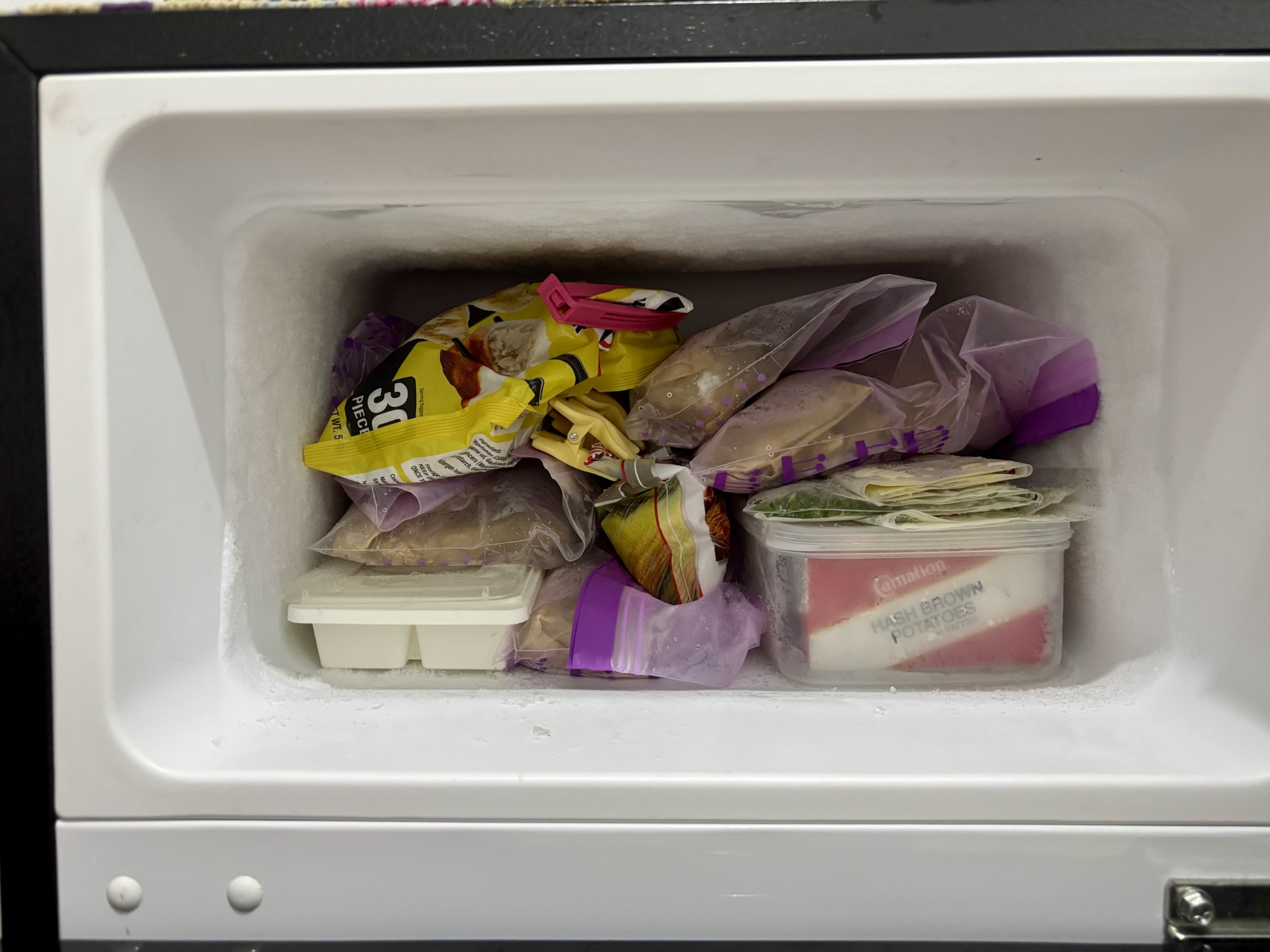
Bonus: Ready-to-heat hash brown potatoes, frozen gyoza dumplings (for that instant mix of pork and veggies) and packs of frozen pre-minced garlic and spring onion for garnish and flavor.
For equipment, a proper gas stove top, a 40L-ish countertop oven, and a 4L air fryer have been invaluable for the bulk cooking.
But for non-meal prep days (like when I crave DIY mixed rice or easy pasta), my basic equipment in the condo is more than enough —microwave oven, a toaster oven, and a small rice cooker. When I upgrade I’ll probably reinvest in my own large countertop oven and a quality multi-cooker. 😇
Maintaining a heart-healthy diet (within budget)
I had my annual physical exam last month, including some bonus laboratory tests and excluding pap smear (which I should really work on getting this year).* I’m a little proud to share that my metabolic markers all look good –though I’d be more surprised if they didn’t. I’ve been going to the gym once or twice a week, regularly walking for hours on weekends, and preparing meals with intention.
Get 50 tests for only Php5,000! Seeing this crazy promo from Singapore Diagnostics prompted me to have my labs done. This is unbelievably high value for money (I’m not sure how this promo is still being offered). Not an ad, but well worth it if you don’t have HMO-backed or PhilHealth Yakap alternatives.
*I also injected flu vaccine on myself via anterolateral thigh intramuscular route for the very first time, which was successful but maybe not something I should be recommending to other healthcare professionals…
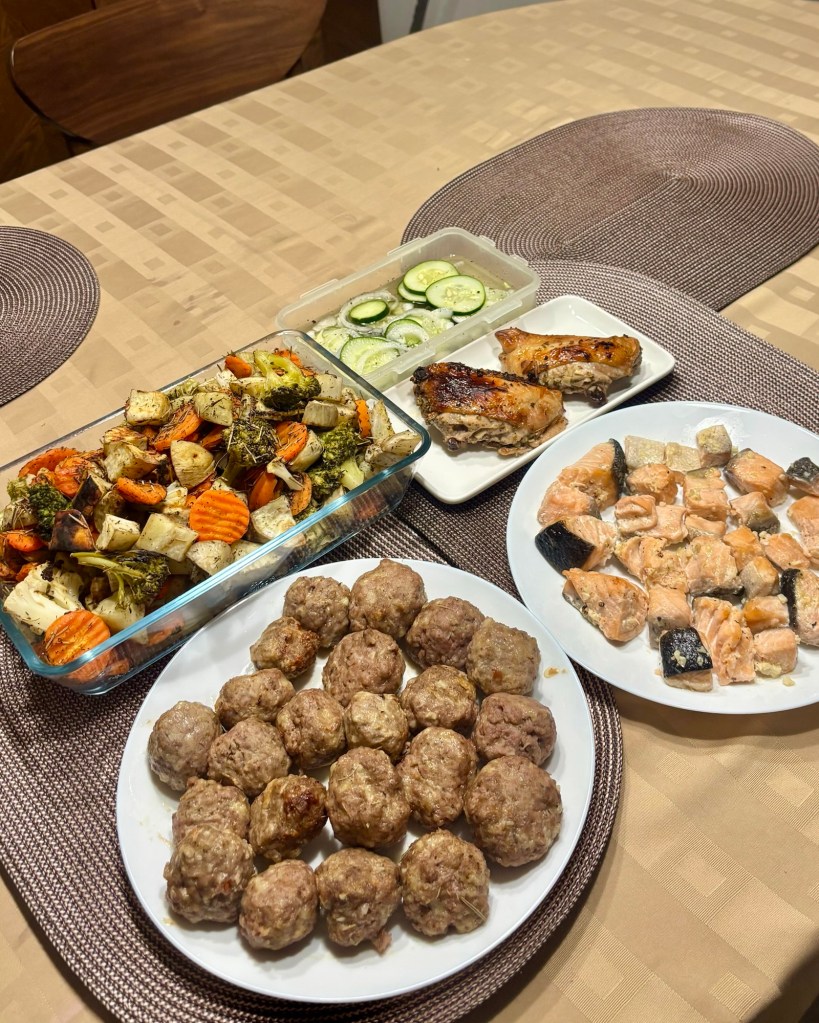
Garbanzos/chickpeas are my favorite plant-based protein option right now, though it’s not in this photo. For protein, I always make sure to have one fish option as baked fillet in lemon (usually salmon or Pangasius), and some chicken (I typically season with just lemon and oregano).
.
In Lifestyle Medicine, a whole food plant-based diet places emphasis on the intake of fruits, vegetables, whole gains, and legumes. In terms of preparation, it also focuses on eating foods that are as close to their natural state as possible. Added sugars, artificial ingredients, heavy processing, and artificial preservatives are avoided.
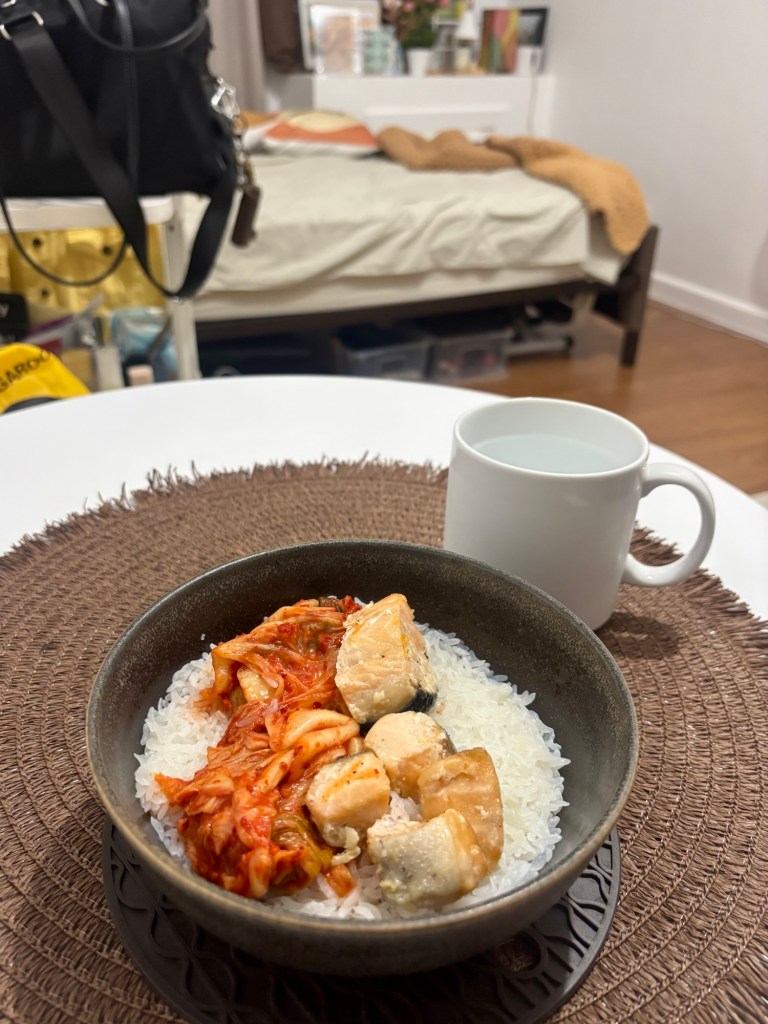
I don’t think I have the time or energy in me to invest in a fresh salad or vegetable or fruit every other meal, so frozen vegetables are still my go-to (for now). My second go-to is kimchi.
.
Bulk meal prep hasn’t lost its shine yet, so I hope to continue this in the coming months and years. My only secret wish is to move condos (again) to a unit with a better-equipped kitchen, but that’s a dream for myself in maybe two to three years. My second secret wish is a food thermometer.
Additional guide for wellness:
• Visit the Food and Nutrition Research Institute website and other online resources for more information about Pinggang Pinoy, a visual plate guide designed for Filipinos. Every year since 2012, they’ve also been producing an annual menu calendar. The 2026 theme was “Nourish to thrive: Recipes to support the management of Diabetes“. The other year, their focus was food security. I’m actually a little interested to try some of the recipes out.
• Visit my page for Patients and Partners in Care, for a more detailed guide in recommended screening tests, lifestyle habits, and even vaccination per age group.
Until next time! ♥


Say something back.