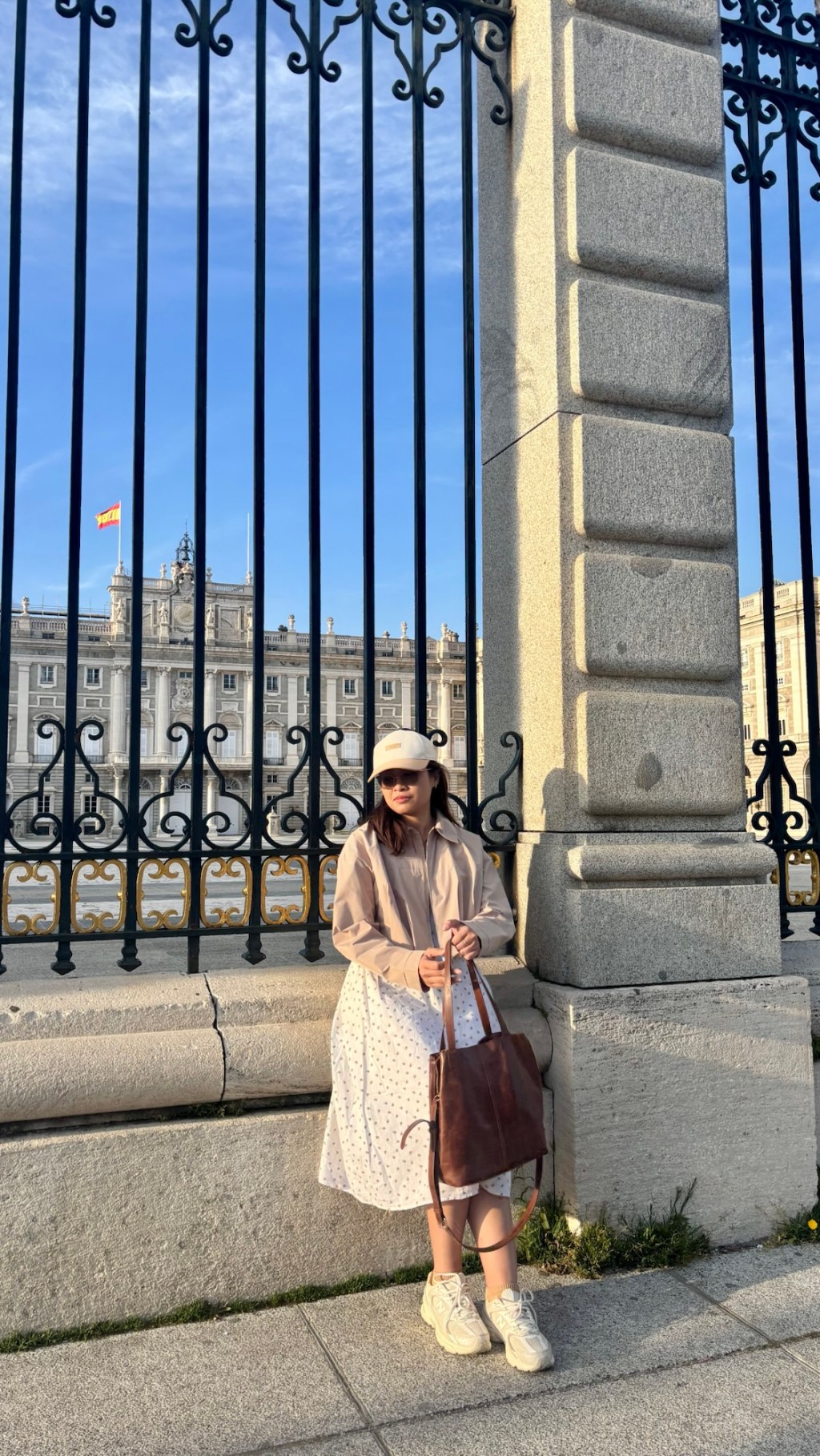
Several video edits and roughly sixteen (??) months later, and I can finally round up my blog post series for our 2025 family trip in Europe. Hello, Madrid, I hope to come visit again soon!
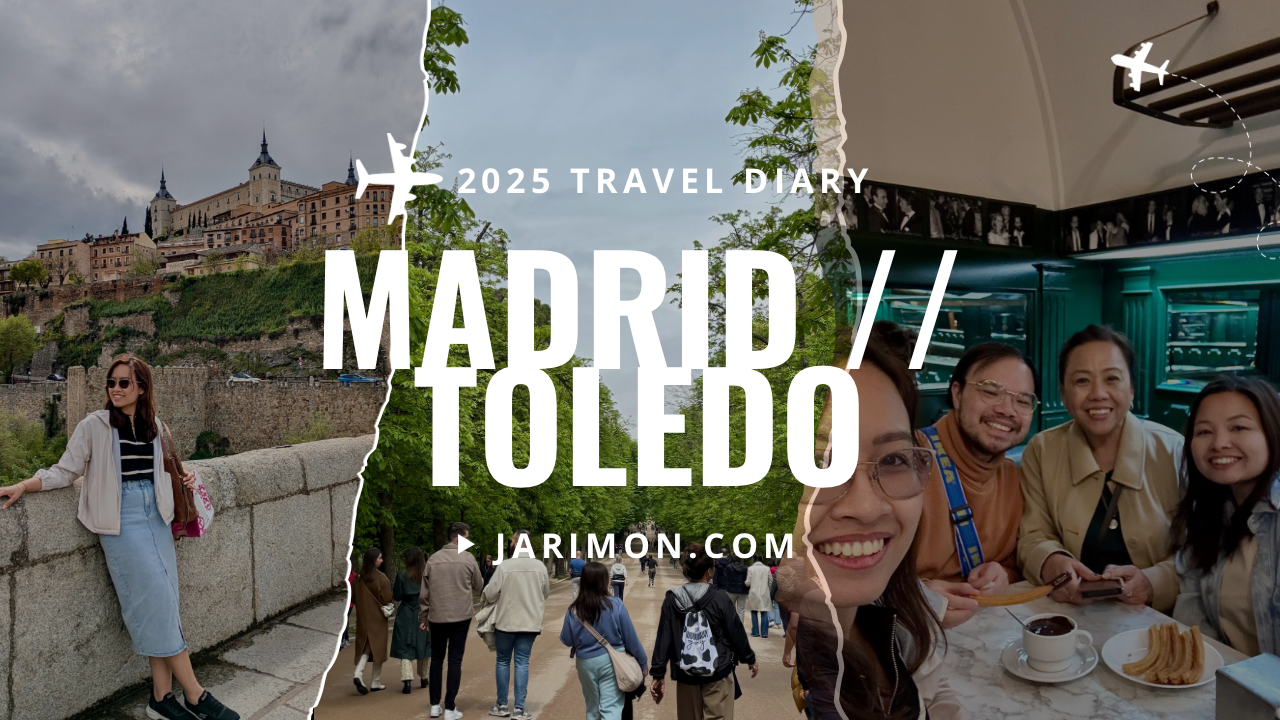
We spent only a couple of days in Madrid, plus a day trip to Toledo. The vibe of the city is more cosmopolitan and less whimsical compared to Barcelona. It’s all about art and history —during our walking tour, we passed by markers for century-old shops and taverns, and we retread steps first taken by Moors and then by Castilians. Aside from the historical bones of the city itself, Museo del Prado and El Retiro shine as the city’s must-see spots.
Here’s a short travel video diary of our stay in Madrid and Toledo ❤️
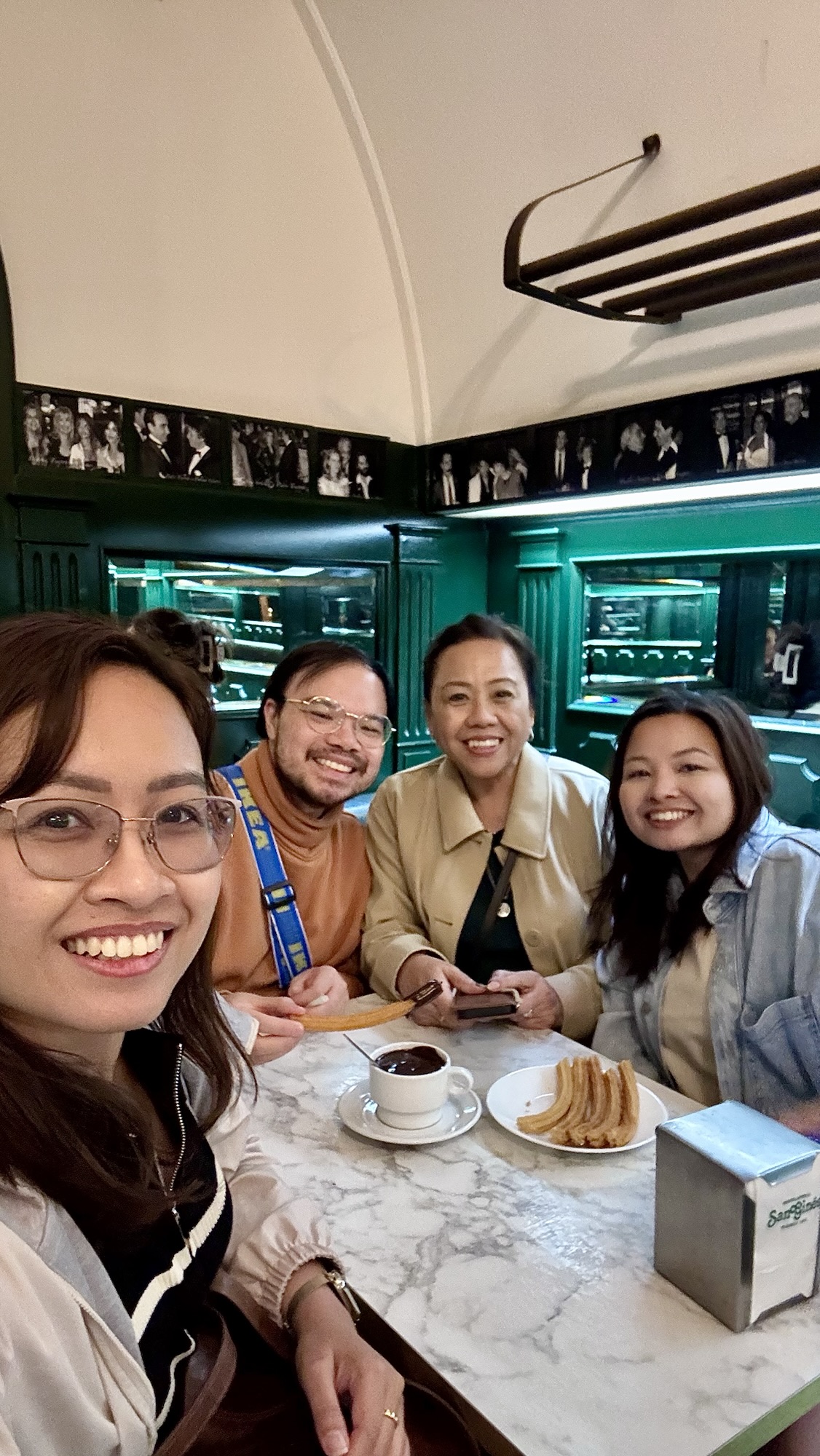
For this last leg of our Europe trip, thank you so much to Jan, a family friend, for being our local guide / translator! And also for bringing us to the iconic Jollibee branch in the city. I can only wish to be as fluent in Spanish as you by the end of this year (as if).
A history of more than a thousand years…
We went on two walking tours in Madrid. One was a free walking tour hosted by GuruWalk. Bulk of it centered on the establishment of Madrid —like as a fortified citadel in the medieval period— then the tour sped through some internal revolutions before highlighting old commercial shops that have been operating in the city for more than a hundred years.
Going on a historical tour in Europe (or USA or Japan or any former/current imperialist power) will always leave a bitter taste in the mouth for me. That is the disappointing and unavoidable flavor of biased retelling. Since these are meant for vacationing tourists, these tours will never discuss how the city’s progress and achievements are built 99% on slave labor, propaganda, and exploitation of the Global South.
I have never felt that more keenly than I did as a Filipino in Madrid. As a people, we spend our formative years discussing the impact of Spain on the Philippines, but our country barely makes a footnote in their own story. And that’s true for the rest of the hispanic-speaking world. Even if it’s our sugarcane plantations and our labor and our Galleon trade that built these roads,.. Anyway, I digress. Nothing a good pulpo can’t fix or something.
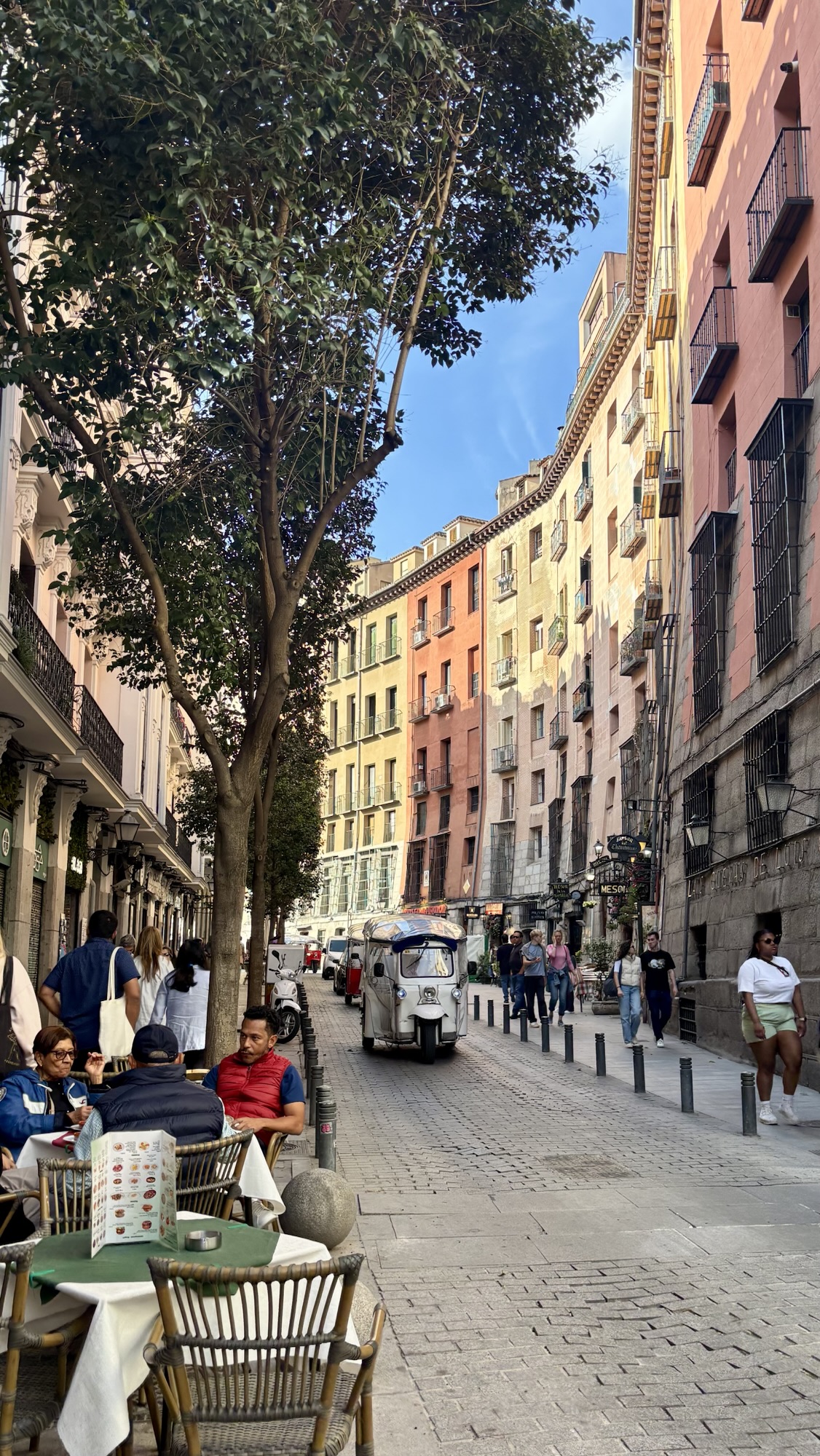
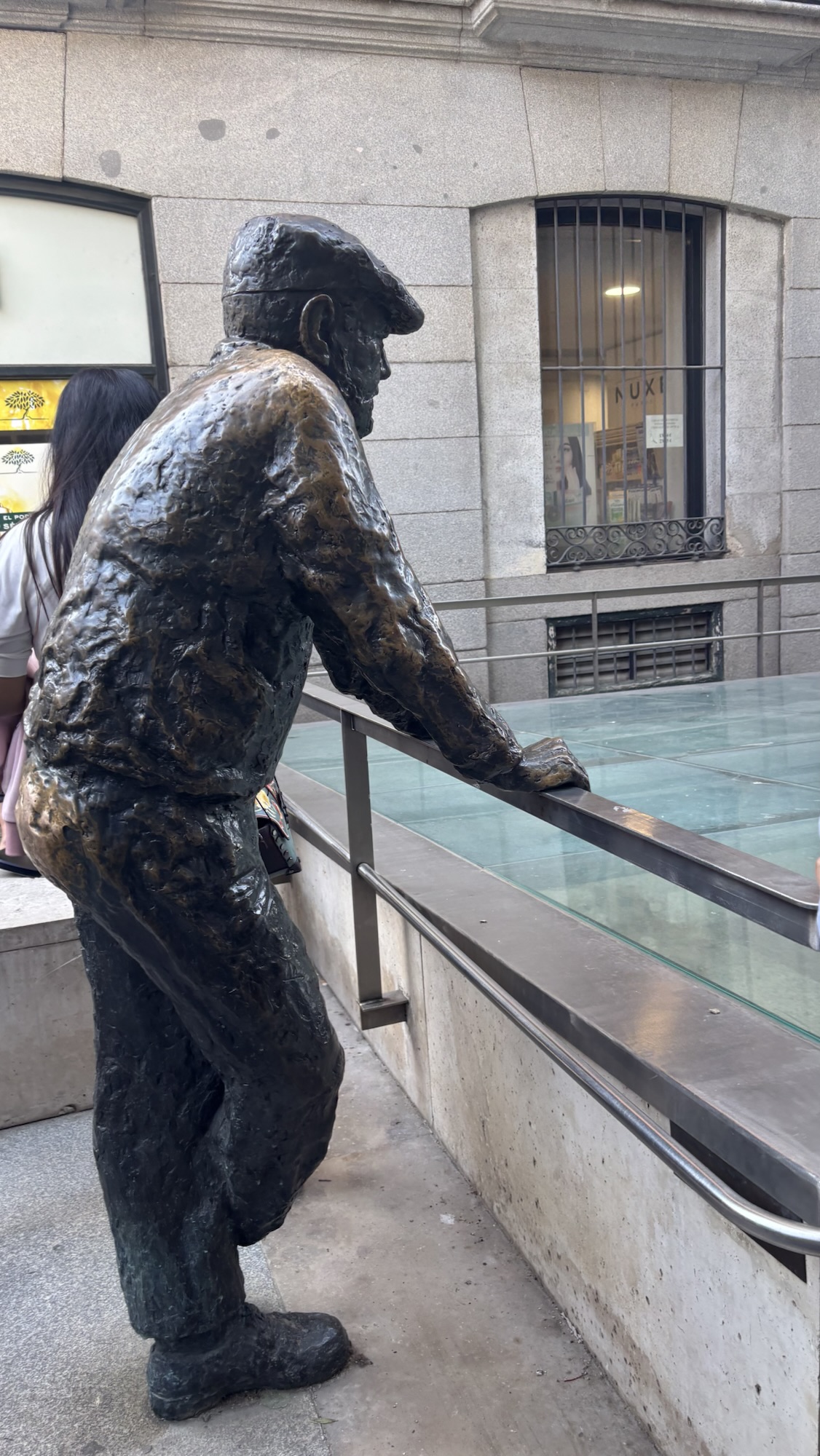
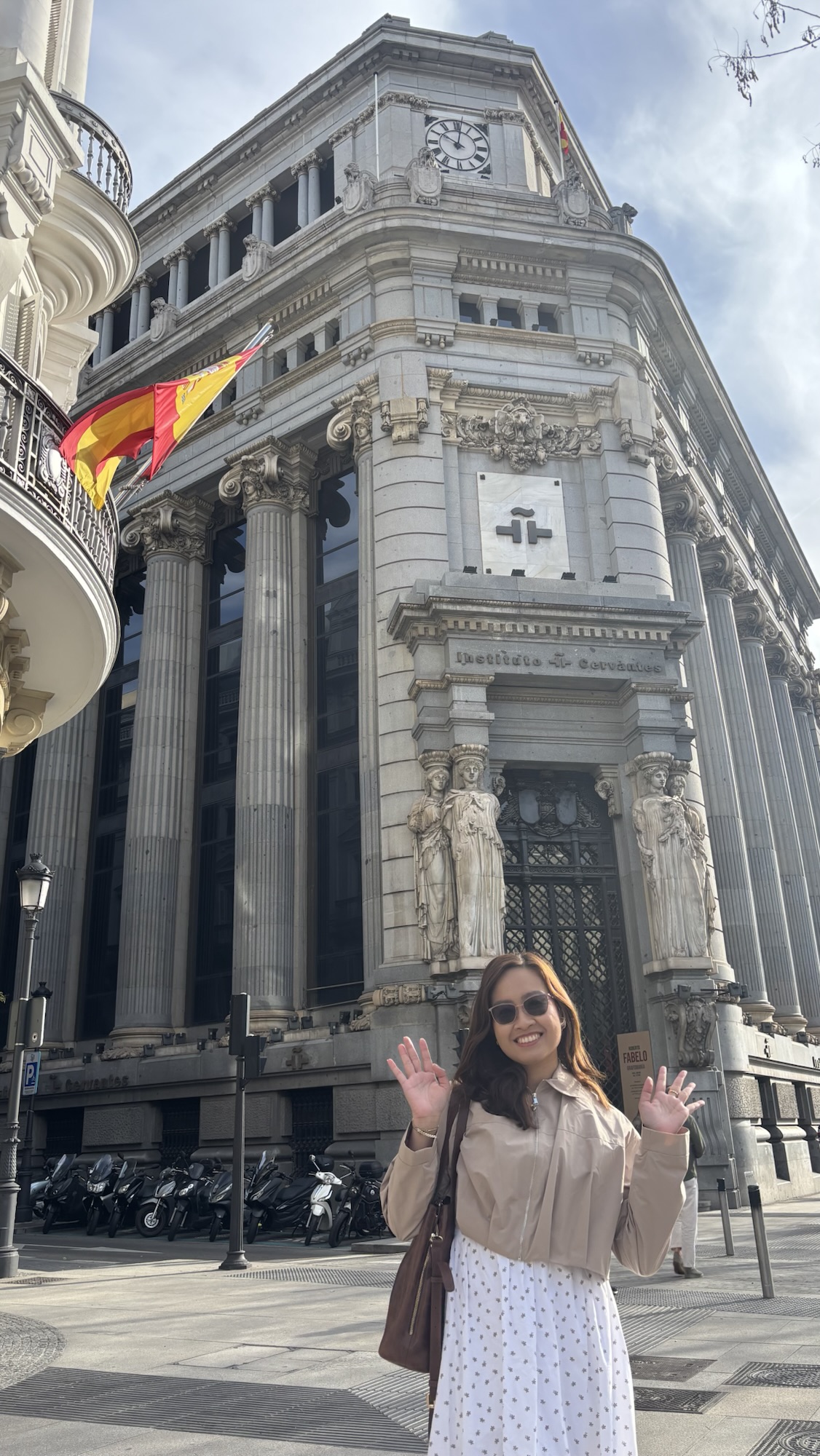
The second tour we went on was essentially a DIY Jose Rizal Tour. Our flight going back to Manila was quite late in the evening, so we spent a morning going to the spots Rizal and other Ilustrados were known to haunt. This also included a mini Luneta park Rizal statue copy. I’ve thought it before and I’ll think it again: what a privilege it is now to travel the world so easily compared to just a century ago, and also, crazy that these may be the exact cobblestones our national heroes stepped on. Maybe they even tripped.
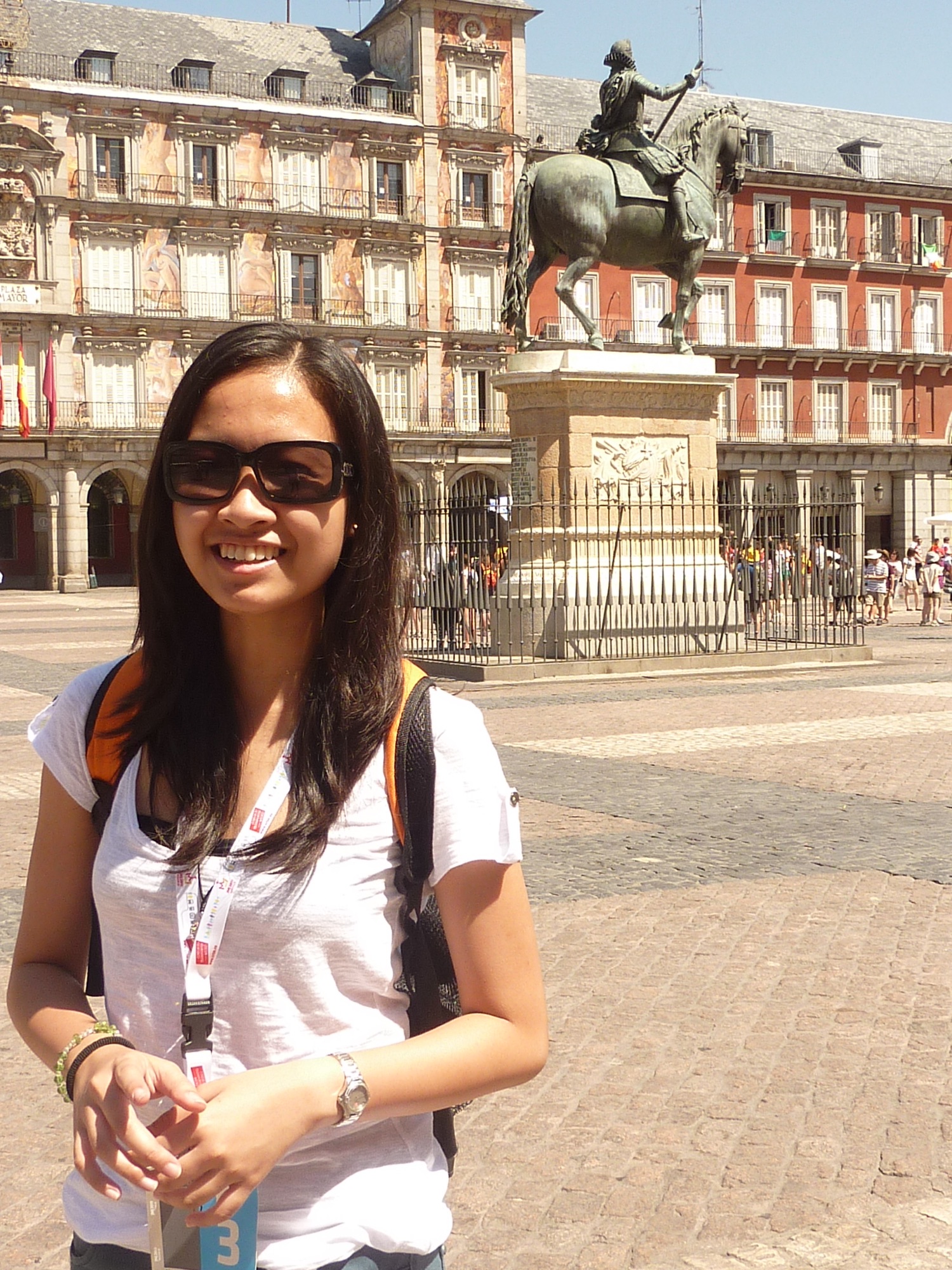
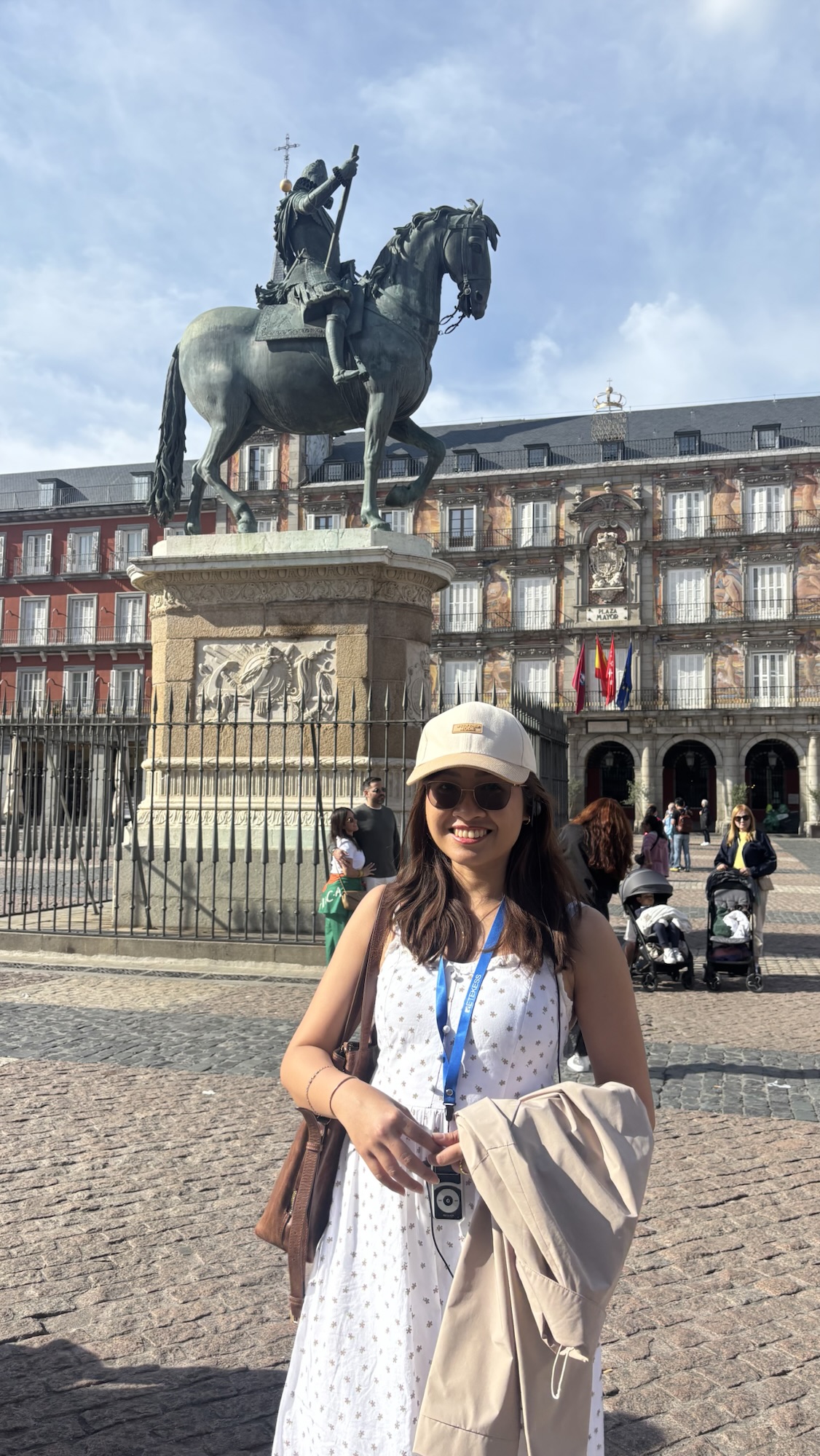
I first had the good luck to travel to Madrid as a 15-year-old girl attending the World Youth Day hosted by Madrid back in August 2011. That’s a combination of Scholastican efforts and my mom’s generous education budget. Fast forward more than a decade later, and the vibe is still pretty much the same: crowded, sunny, with me posing in front of King Philip III in Plaza Mayor.
Toledo, the medieval capital along the Tagus river
We debated for such a long time where we should go for a side trip since we only had one day left for it. For one reason or another, we ended up going to Toledo, the city used to be Spain’s capital before they moved to Madrid. It was an overcast to rainy day, which I think added an extra unique charm to our experience.
As a preserved medieval city, much of Toledo’s draw is in its architecture. There are plenty of shops which showcase real artisanship aside from the usual tourist goods. Our pace was very relaxed, and we had a good time eating in more local places.
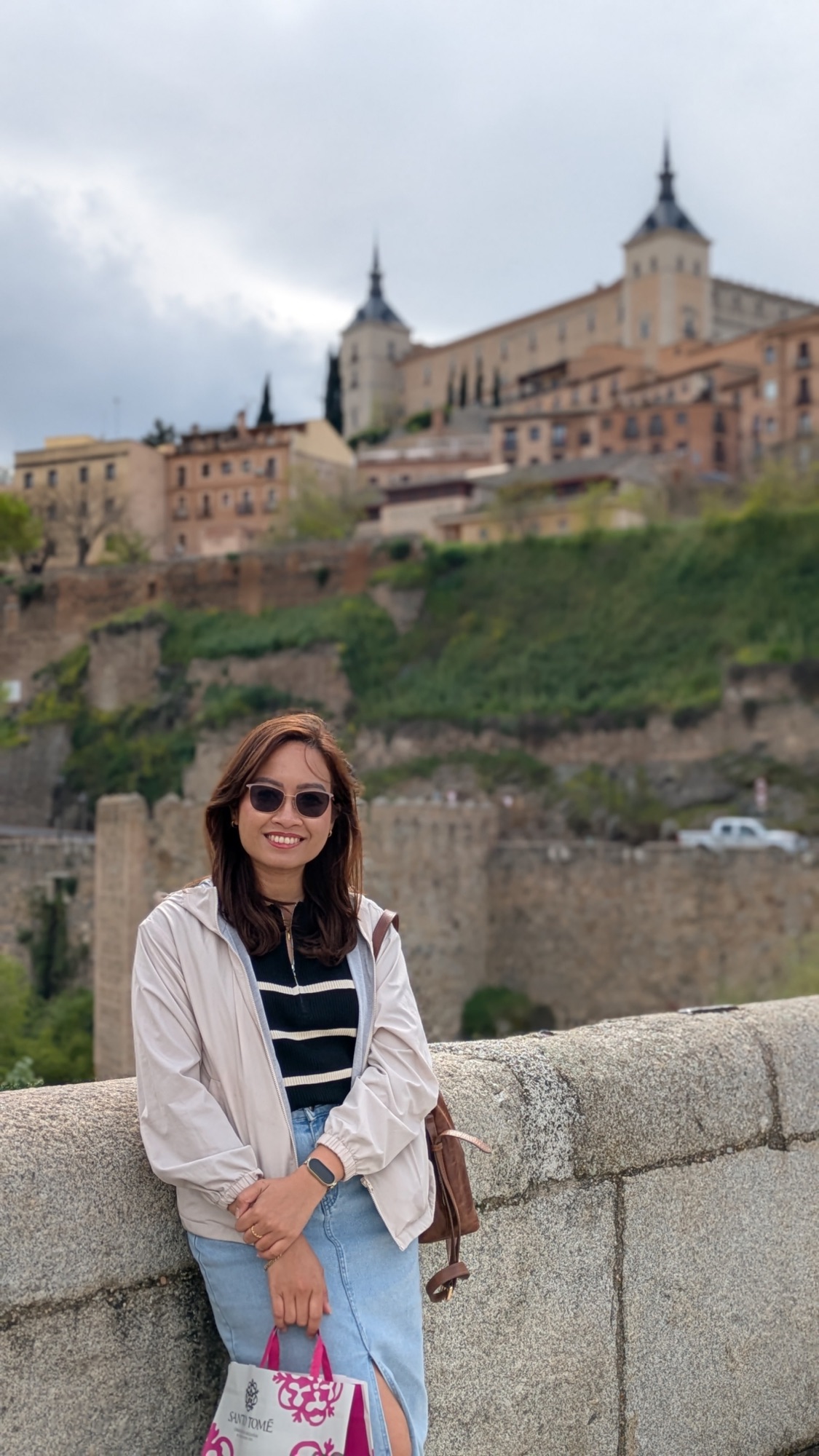
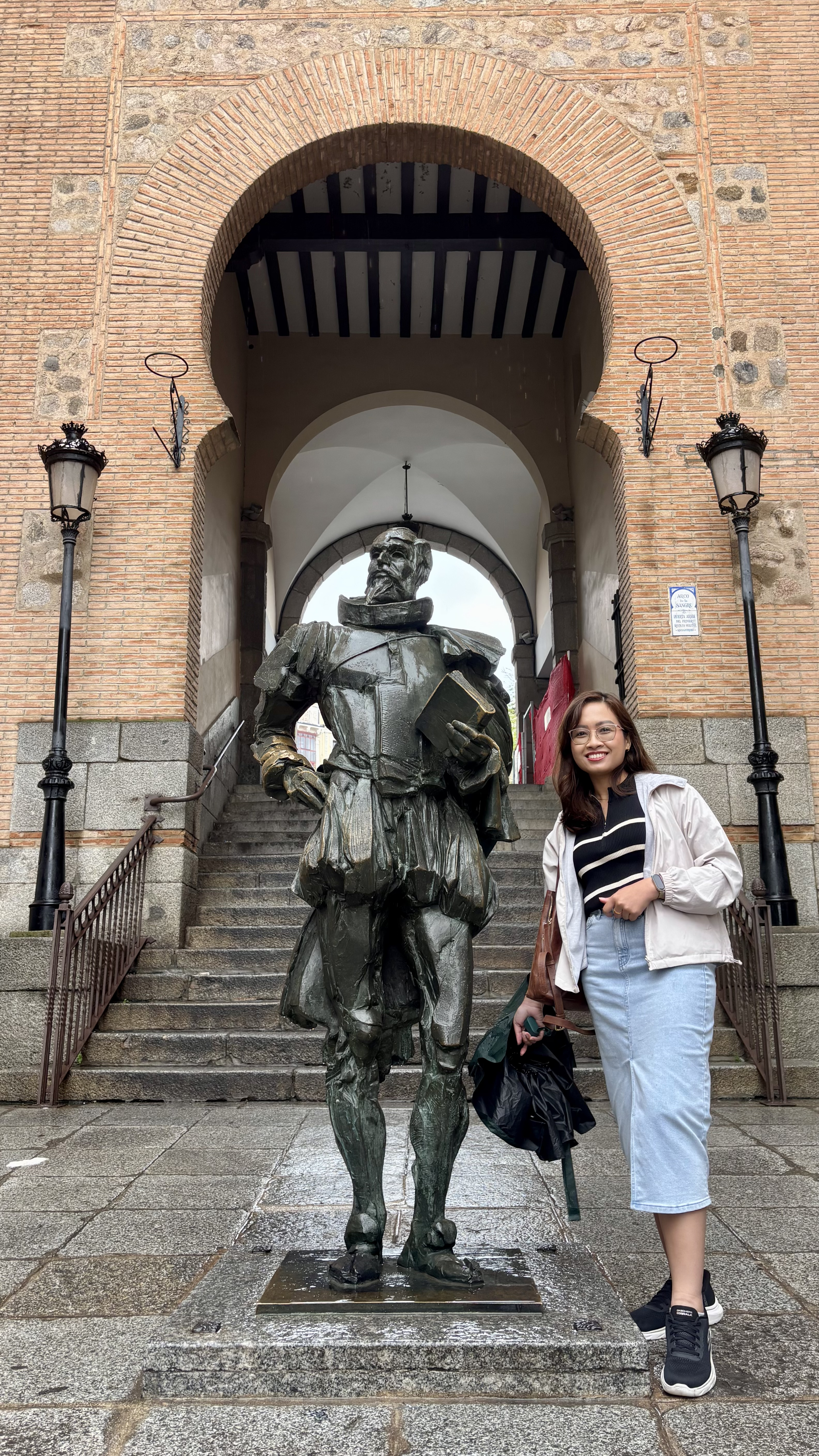
There’s also a beautiful view of Toledo from the top floor of the library, which you can enter for free. We also spent an hour or two in a nearby museum dedicated to El Greco. But when it comes to art, nothing beats Museo del Prado.
Museo del Prado, and the Golden Age of Spanish Art
Museo del Prado now ranks as one of my favorite classical art museums in the world for many reasons. The first is the collection, which is rich in must-see works in the western art canon. I have a vague yet fond memory of seeing Bosch for the first time in this museum back in 2011; I even wrote an essay for it for my art history elective. (Though apparently the authorship of The Seven Deadly Sins is still very much in question.)
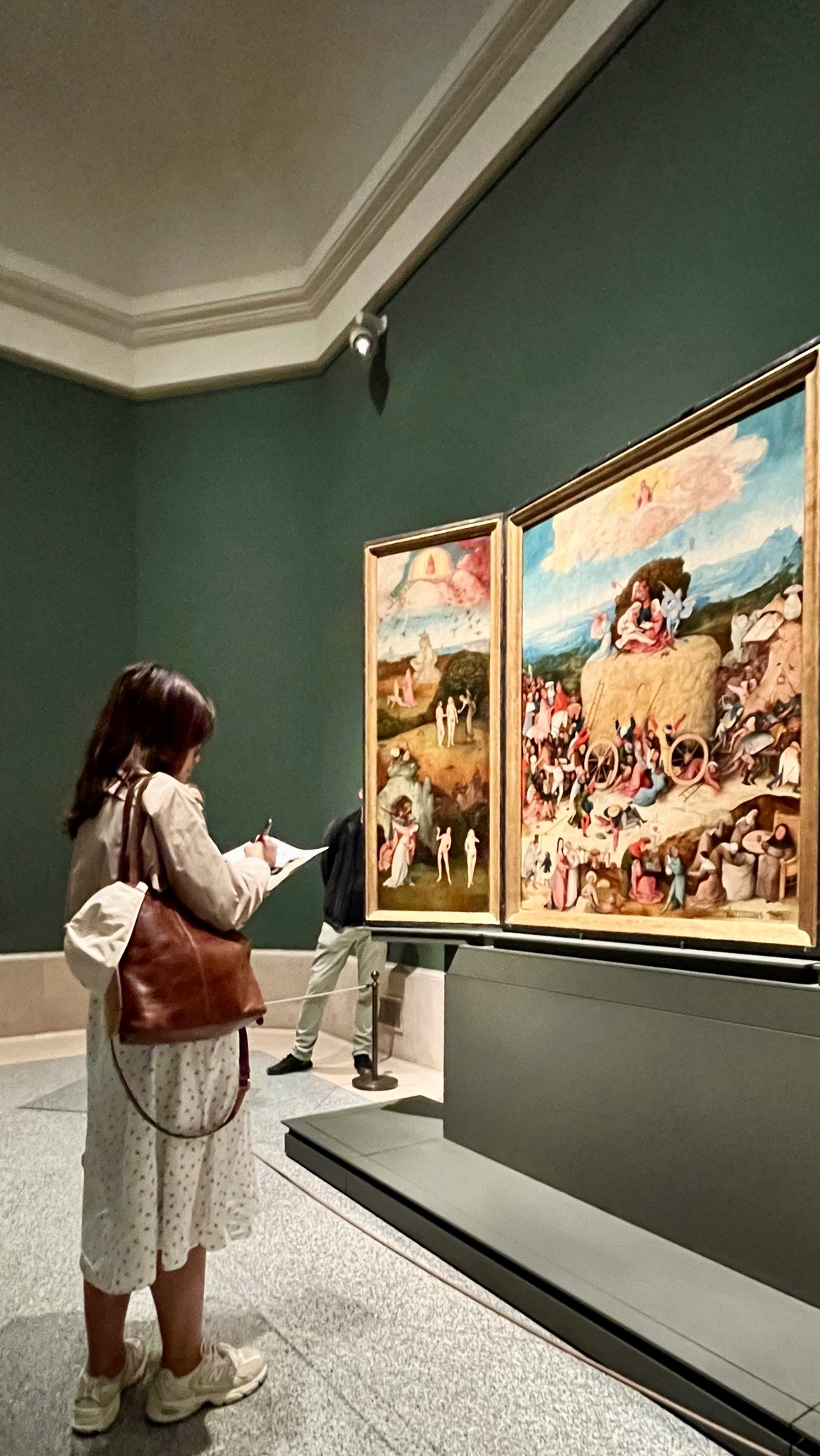
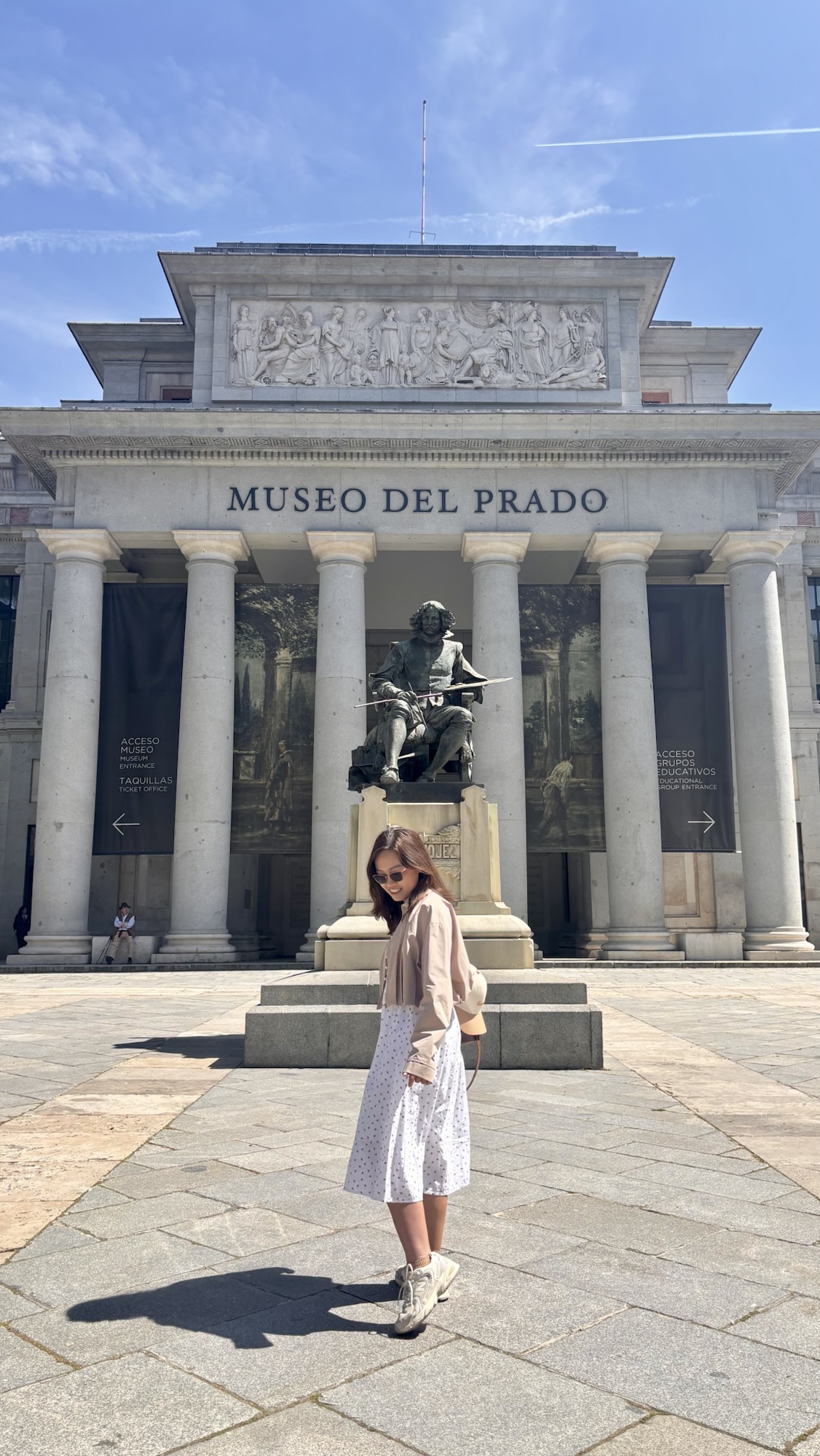
Second is the culture behind its curation. There is a strong and visible effort towards preservation and restoration, which seems to be leagues beyond other classical and antiquities collections in the West (that I know of. I’m not an expert).
And lastly, this trip made it memorable because I fell in love with Las Meninas by Diego Velásquez. I thought I wouldn’t really like anything interesting in the realm of royal portraiture. The idea of court painting gets pretty tiring. In the end, I should never doubt the greats or my art books. We’ll meet in peace and beauty at the right time and right place.
The art museums we visited in our Europe tour made such an impression on me (as expected and planned), and I was so excited and lucky to have seen so many great works that I actually wrote a whole separate post about it. Revisiting these memories is bringing me back to my aesthetic happy place. ❤️
Read more: Europe 2025 – Museum and Art Tour
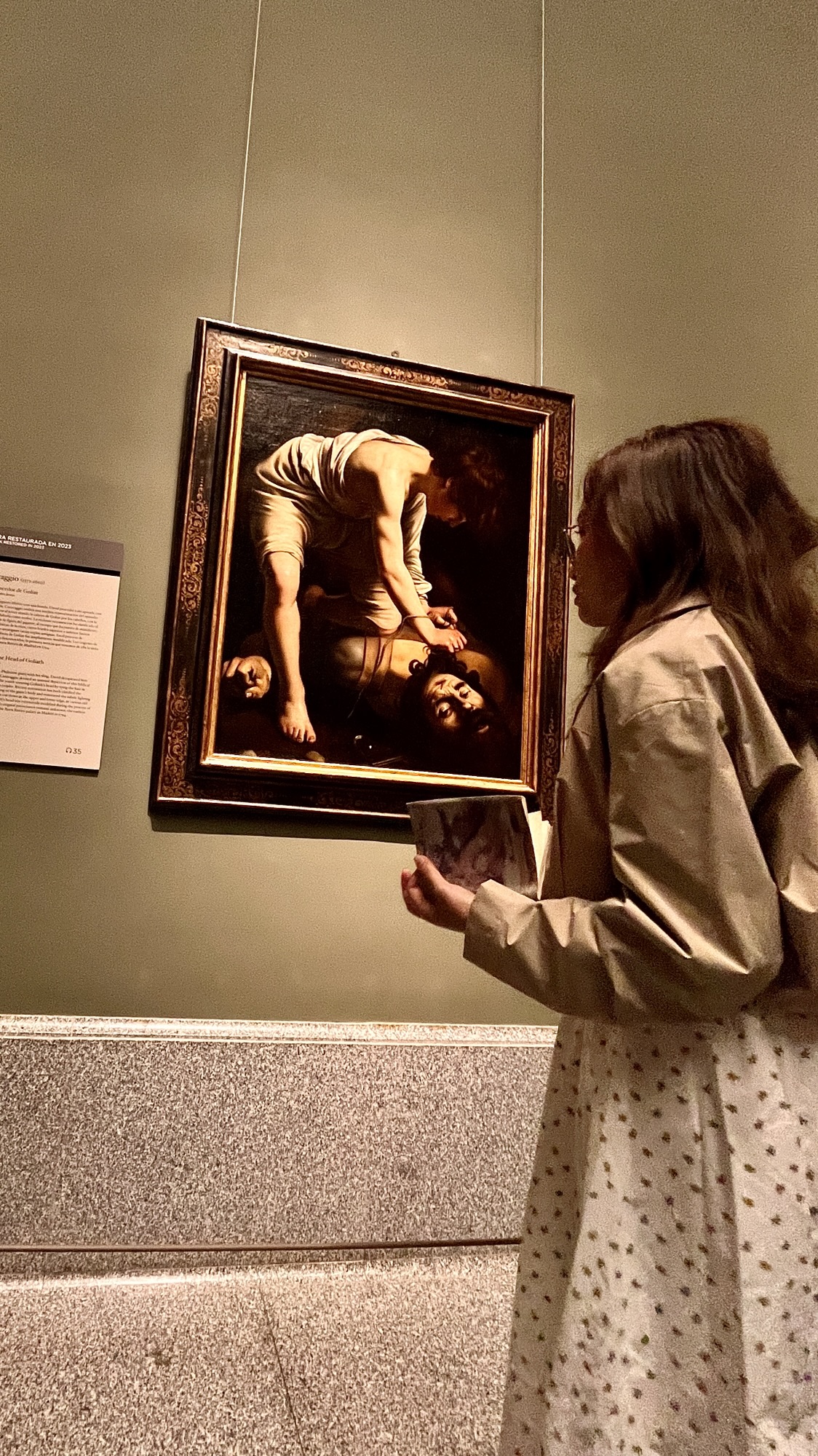
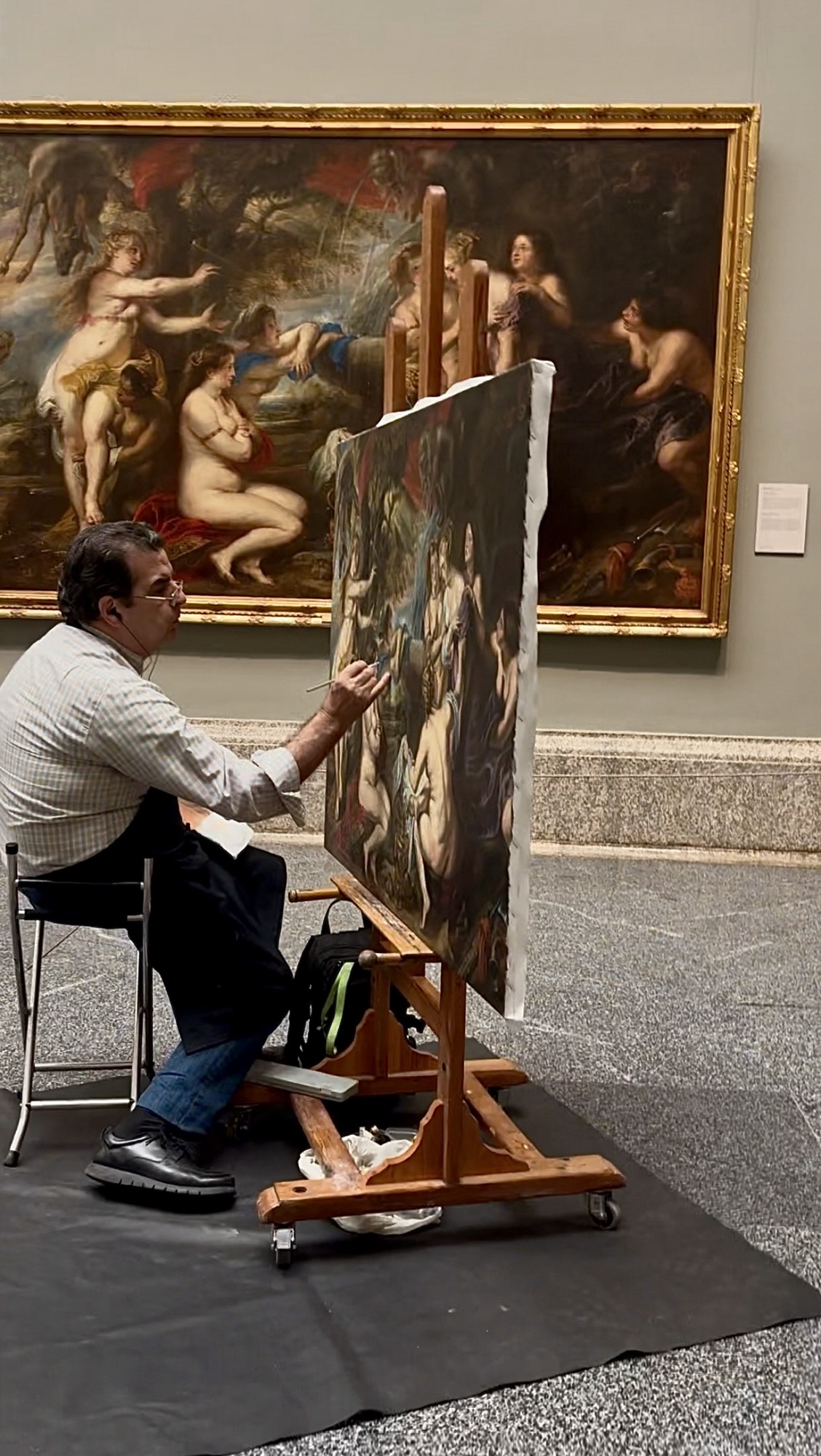
I’ve rambled for so long only to end on the note that Madrid is a beautiful city, packed with great art, and paved with history-laden streets. There’s a lot we left unexplored when it comes to culture, from nightlife to traditional Flamenco. And of course I still want to come back to visit Reina Sofia, and to jump off to take more side trips out to Seville or Granada.
¡Así que espero volver pronto! See you!


Say something back.