I came to Lisbon with no expectations. Before our family trip last April 2025, all I knew of the city came from promotions for our family medicine society world conference.
Writing this after having visited at least a dozen European cities, Lisbon surprisingly rates at the top as one of the best. It certainly feels like one of the most livable areas; prices can be reasonable, the people are laidback and friendly, and all the inclined walks can only be good for your long-term health.

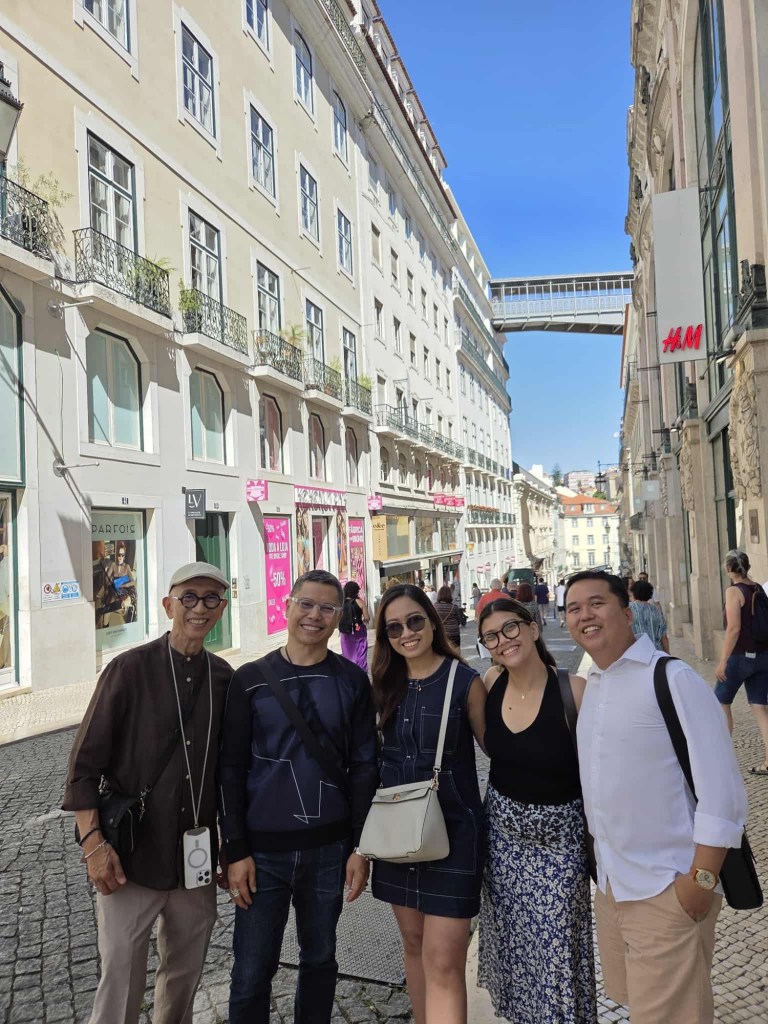
For our visit last April 2025, a special thank you to my mom’s friends —Tito Ariel, Tito Jun, and their son Konnor— for touring us around Lisbon and even the surrounding cities. And when I returned September for the world conference, I did a lot of cafe-hopping with my co-residents Joeric and Romina, so much love to them too. (And Tito Ariel and Tito Jun treated us lunch as well, so again, thank you!)
My experiences may have been colored by present company, but I think I got a pretty good grasp of the city after staying for over a week.
Here’s a short video featuring the places we visited last April 2025, from the different neighborhoods in Lisbon, to day trips to Sintra, Cascáis, Fatima and more. Enjoy!
Cultural stops, historical sites, and miradouros worth a hike
A visit to a new country is never complete without a tip-based ‘free’ walking tour (at least when available). Beatrice was a great tour guide who brought us around the different neighborhoods of Lisbon, even when it started raining pretty hard.
Over the next two or so hours, we got a glimpse of the city’s colorful history as several cultures and enclaves were established through the years. A big part of the country’s modern identity is tied to the 1755 great earthquake. We also enjoyed seeing charming murals, street art, and historical markers.
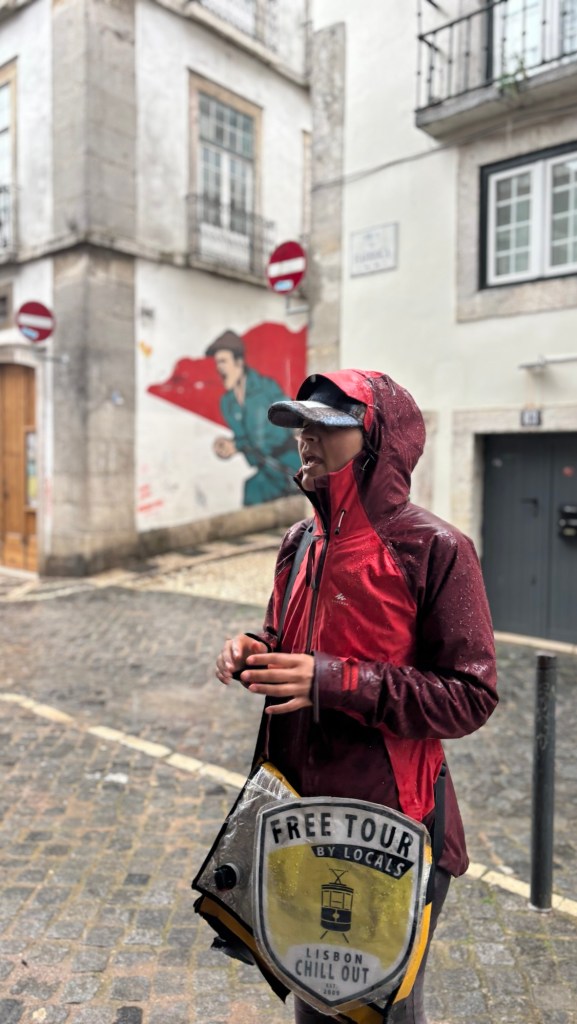
Heading over to Lisbon soon? Check their website at Lisbon Chill Out Free Tours.
We ended the tour with a walk through Alfama, the city’s oldest neighborhood first built by the Moors. The narrow labyrinthine streets can easily confuse non-locals, but at the same time, it feels like a good adventure to get lost. You can just keep going downhill to get back to the center somehow.
But we walked up, and our tour ended at the Miradouro da Graça, a refreshing and exceptionally windy viewpoint overlooking the iconic cityline.
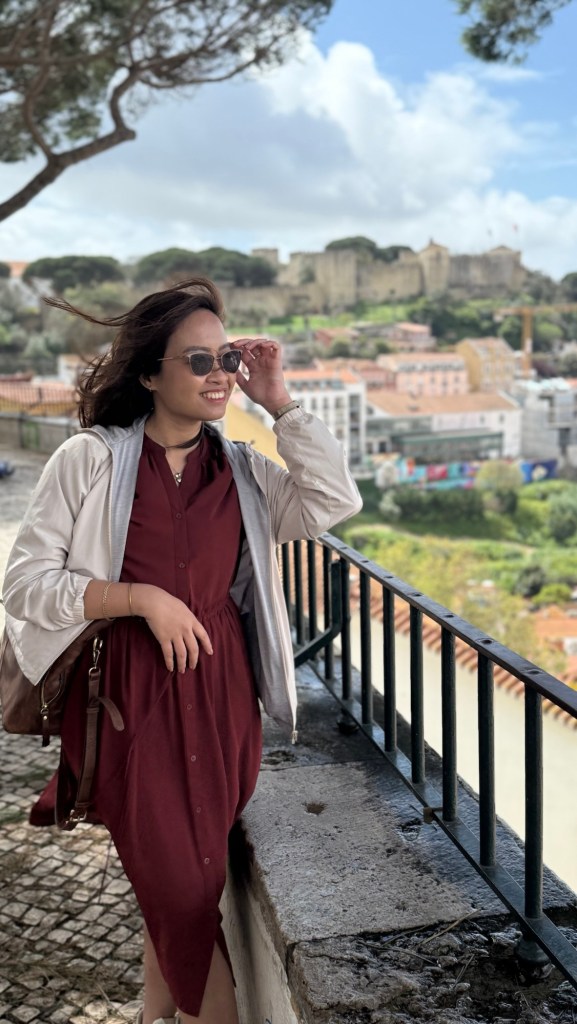
Castelo de São Jorge. We didn’t get to visit this Moorish castle and former royal palace, but I’ve heard it’s also a good and windy walk (if a little bit of a climb).
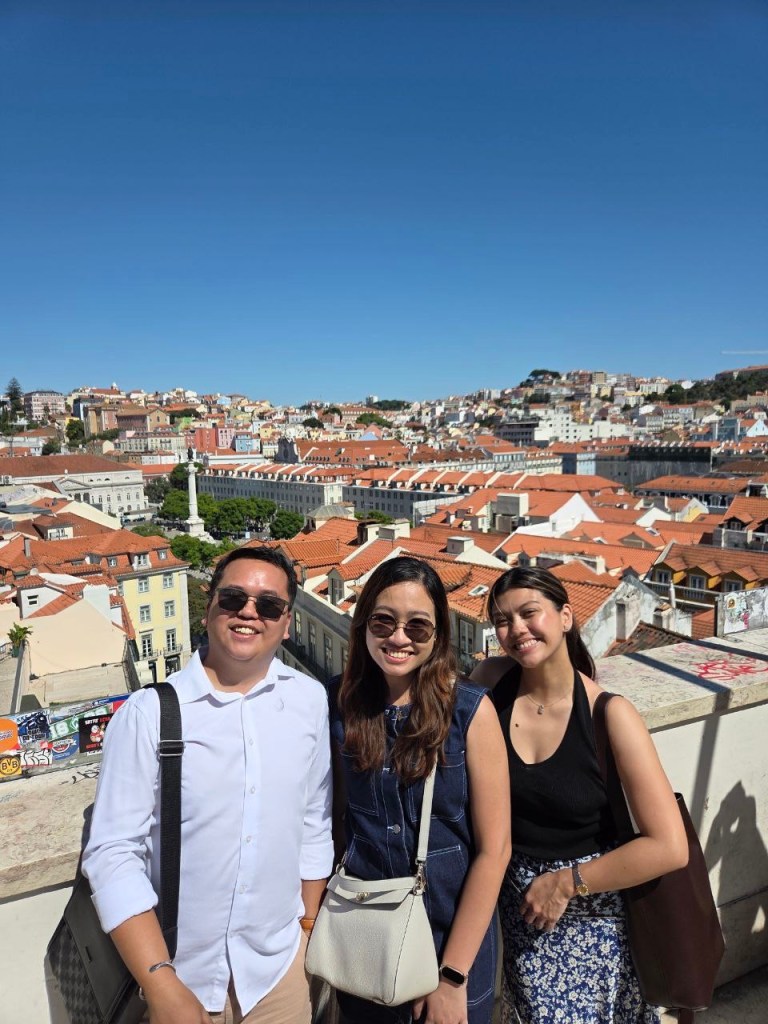
Having access to public spaces and unbeatable views such as these is such a privilege. Can you imagine having something similar in every city? Maintaining these spaces has immeasurable benefits for personal health and for growing a community. You can fall in love with the city again and again watching the sun set.
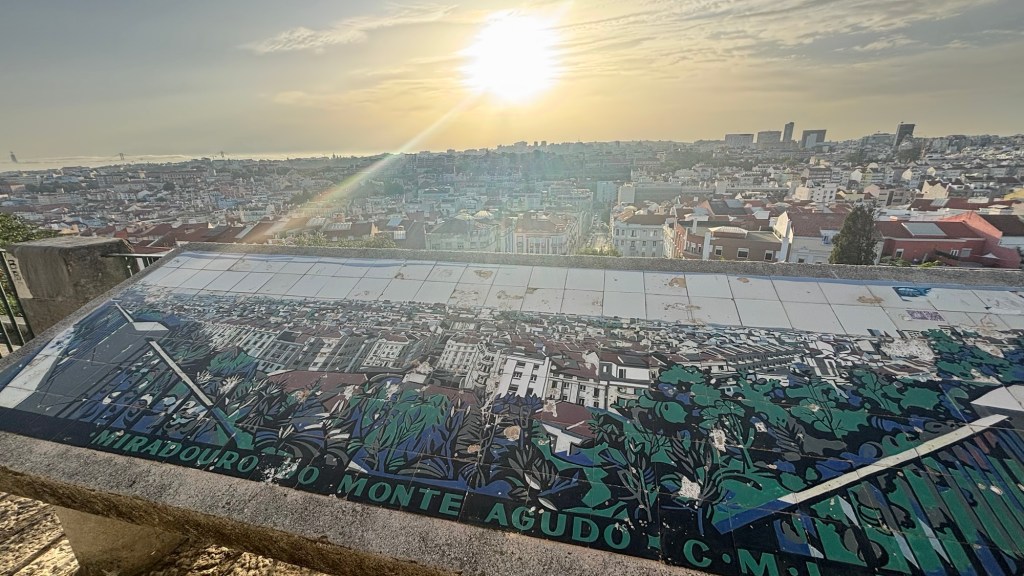
I think it was in Lisbon where I first solidified my idea of a good city to live in: it should have plenty of natural parks and third spaces, be near a body of water or near enough to a mountain or two, and still have a lot of shopping places. I recently found that Iloilo City also fits the bill (even a little better, because I can’t let go of high-rise condominiums just yet).
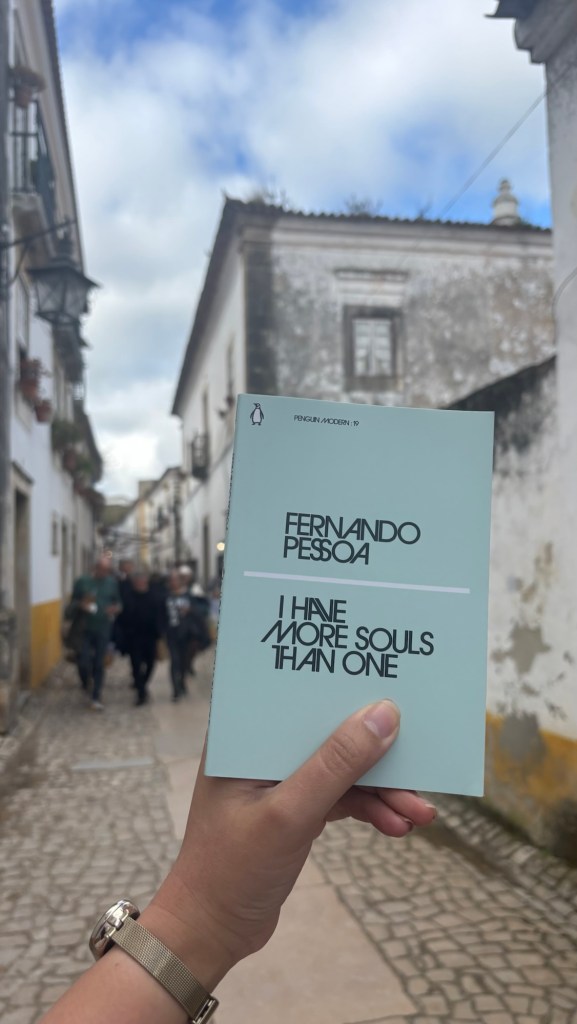
Aside from historical tours and breathtaking viewpoints, Portugal was also home to Fernando Pessoa, one of the greatest literary figures in the Europe’s modern history.
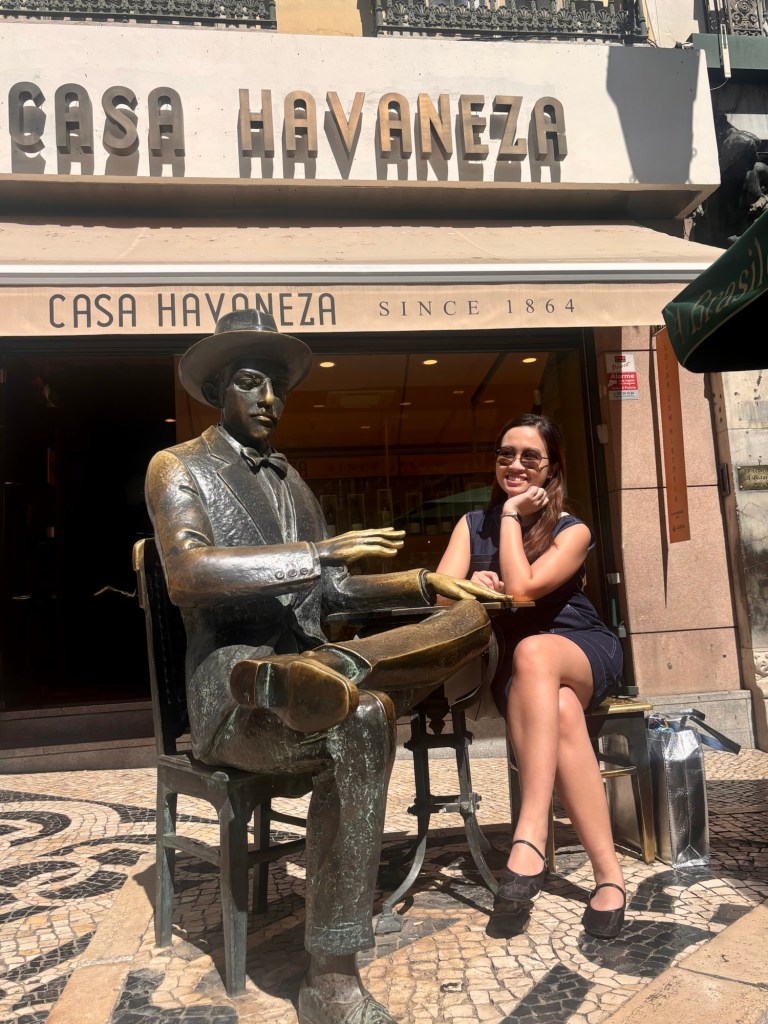
I had the pleasure of picking up one of his collection of poems during our family trip last April. He writes with such clarity and simplicity. The ability to distill complex emotions from different characters into moving poetry is a rare skill. Would definitely recommend!
More on GoodReads – Fernando Pessoa’s I Have More Souls Than One
Since 2024 or so, I’ve made a resolution to visit at least one garden or natural trail or park per city whenever I travel abroad. But because our April family trip was already jam-packed, we didn’t have much time for idling about aside from quick stops at paved squares or soaking in the views at the miradouros.
Luckily, I was able to squeeze in a visit to Estufa Fria during the last conference day back in September. It’s a sprawling, multi-sectioned greenhouse within Parque Eduardo VII. The three distinct gardens include the cold greenhouse, a tropical jungle section, and an arid environment for succulents.
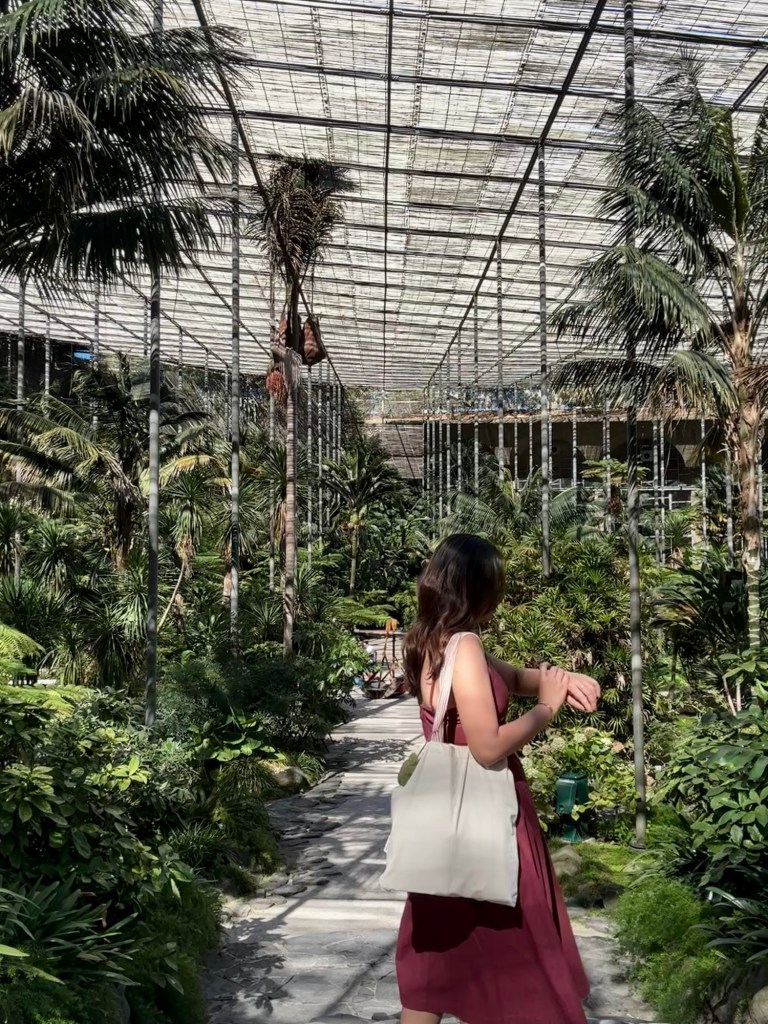
If you have an extra half-day or so to spend in Lisbon, I highly recommend this garden and its neighboring park.
To the wonders of west Lisbon: Bélem and Alcântara
Take either a 15-minute drive, a 30-minute tram, or a 2-hour leisurely walk along the Tagus River —either way, you can’t say you’ve been to Lisbon until you’ve visited its western districts.
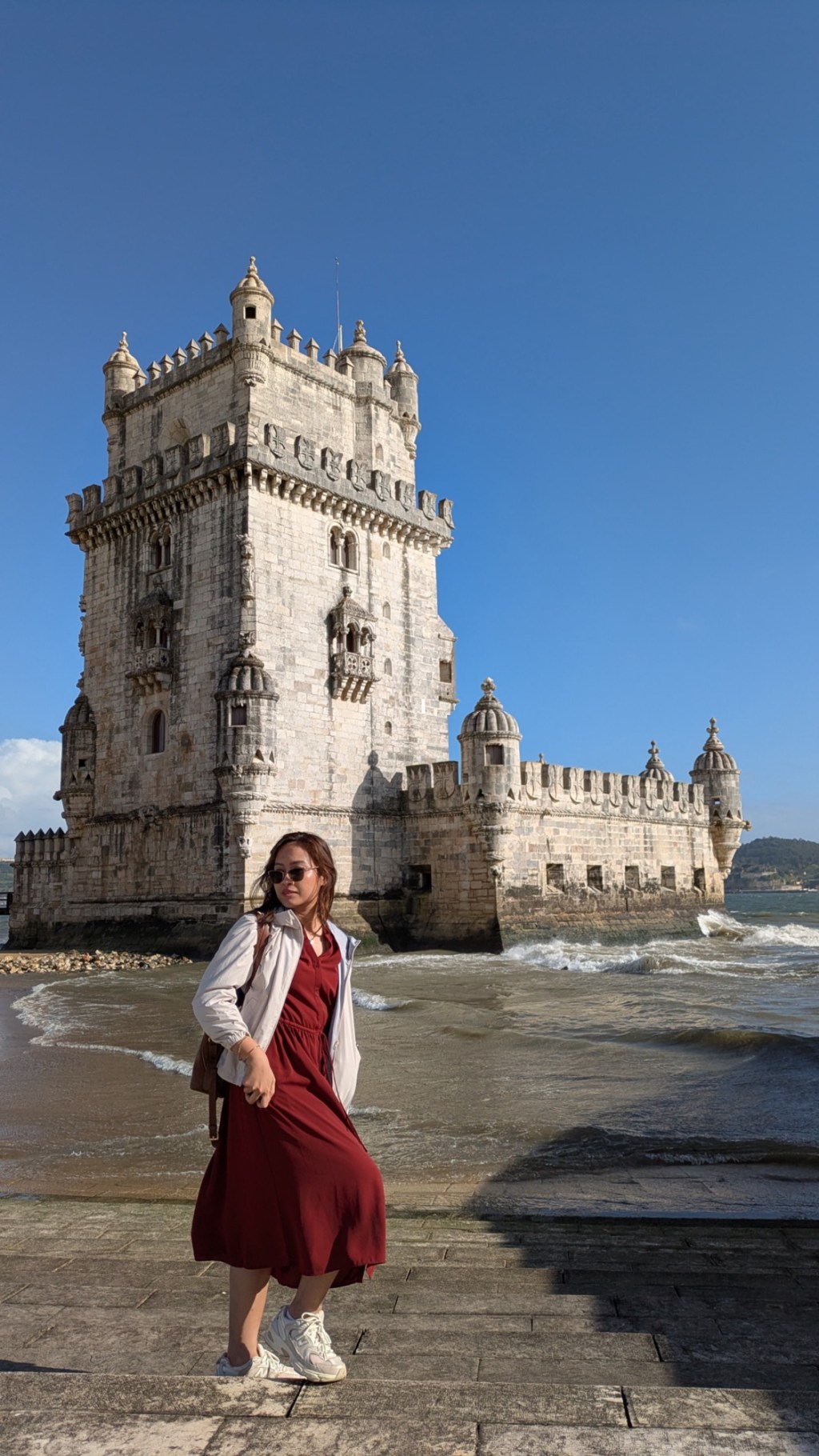
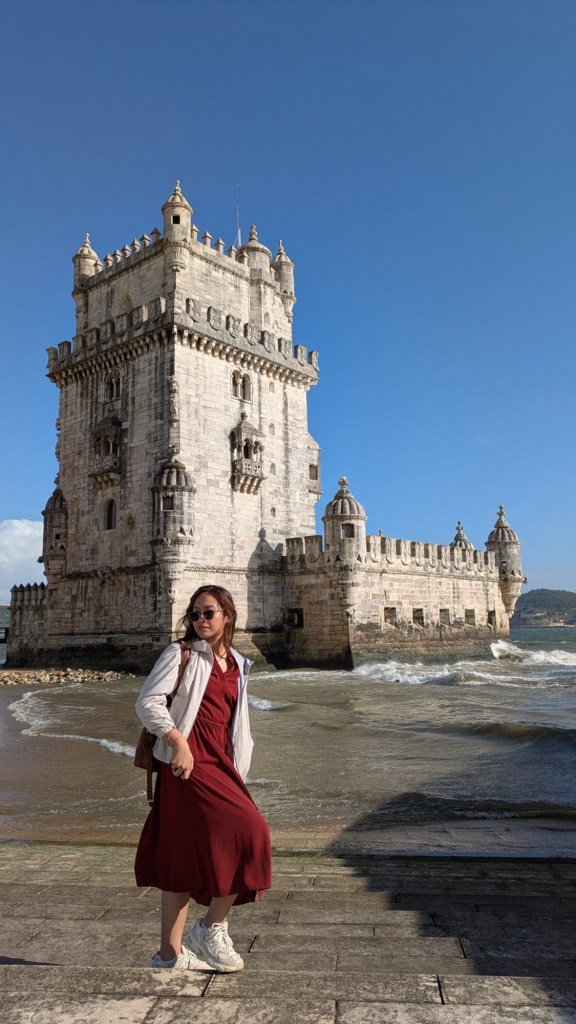
Torre de Belém is one of Portugal’s most iconic landmarks. Though we didn’t go inside the fort, it’s already easy to appreciate the intricate exteriors from meters away. Built in the 16th century, it’s a testament to the beginnings and heights of Portugal’s colonialist expansion.
A few minutes’ walk from Belém Tower is the Jerónimos Monastery, another intricately-designed monument to the Age of Discoveries, this time specifically commissioned to celebrate Vasco de Gama’s journey.
lAs a UNESCO World Heritage site and a beautiful display of the late Gothic Manueline architectural style, you can imagine it’s quite busy —we suffered dehydration while waiting in a very long mid-day queue, so the pro-tip is to either come very early during the day, or very late!
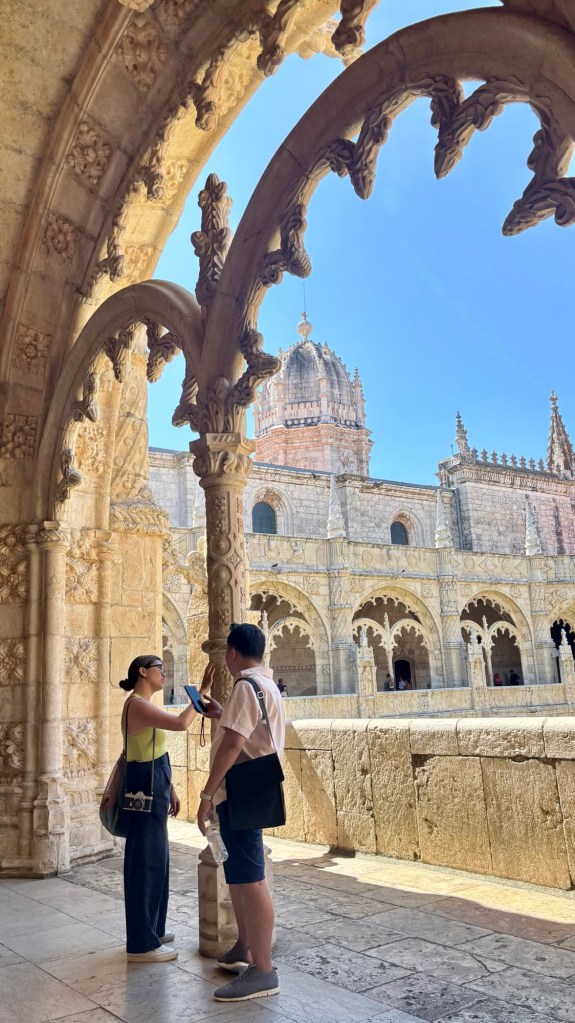
It was also a little bit of a headache to find the official ticketing website of this place. There are a lot of dupes and possible scalpers out there. The official website is the Museus e Monumentos page (the one with the .pt domain).
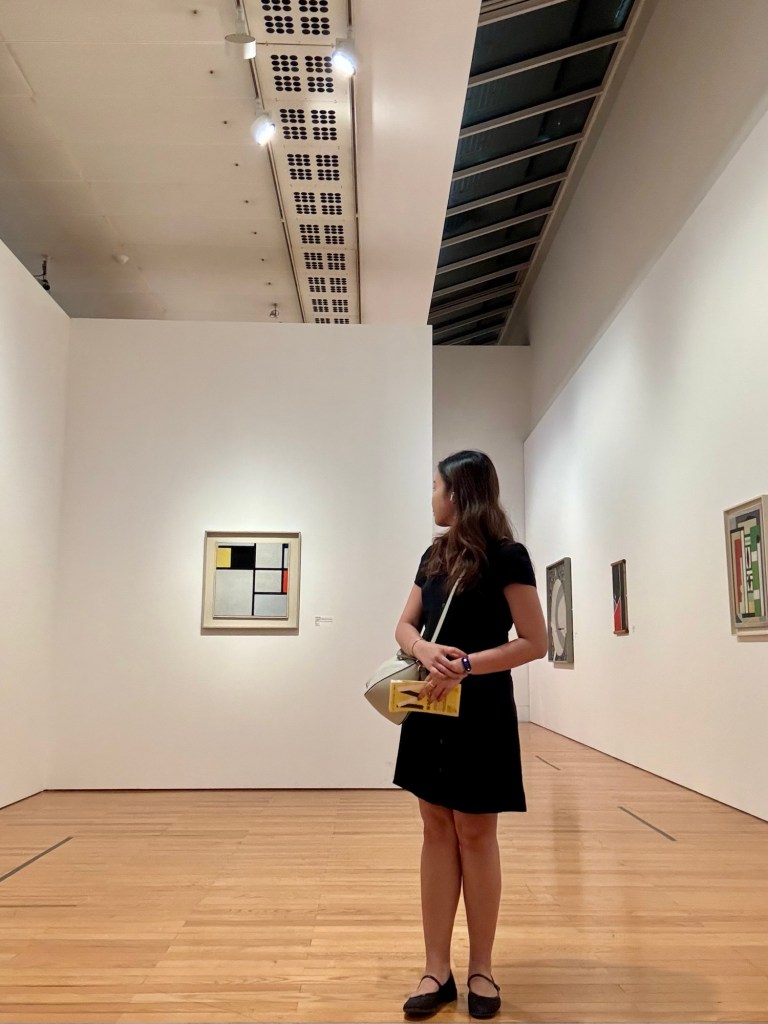
Lisbon also has a very active contemporary art scene. Last September 2025, I was lucky enough to visit the Museum of Contemporary Art and Architecture Center / Centro Cultural de Belém (MAC/CCB), which houses modern and contemporary art inside an imposing brutalist-rationalist complex of buildings.
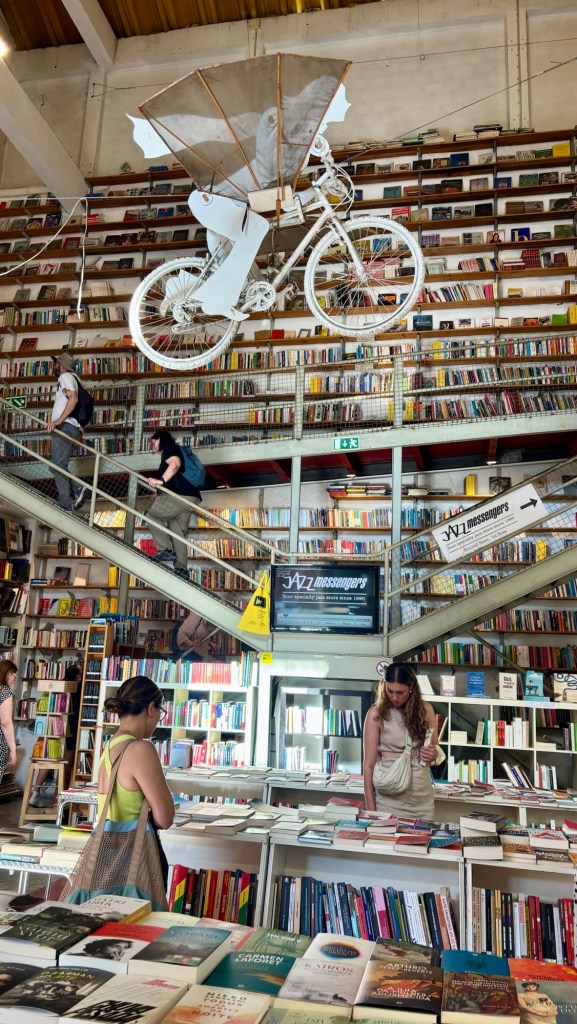
Aside from formal collections and museums (and Portugal has many, from museums on the history of money to exhibitions of old ships), art also thrives in the trendy LX Factory. Located in Alcântara, a tram ride or so from Belém, this previously-industrial complex combines bohemian vibes, local artisan stores, and experimental restaurants. And this quirky bookshop: Livraria Ler Devagar.
With everything that Lisbon has to offer, I can confidently say that one or two days in the city is not enough. To truly enjoy the city and embody its laidback vibes, I recommend at least three full days for the city, and several more days for fun day trips.
Day trips from Lisbon: Thoughts on Sintra, Cascais, Óbidos, and Fátima
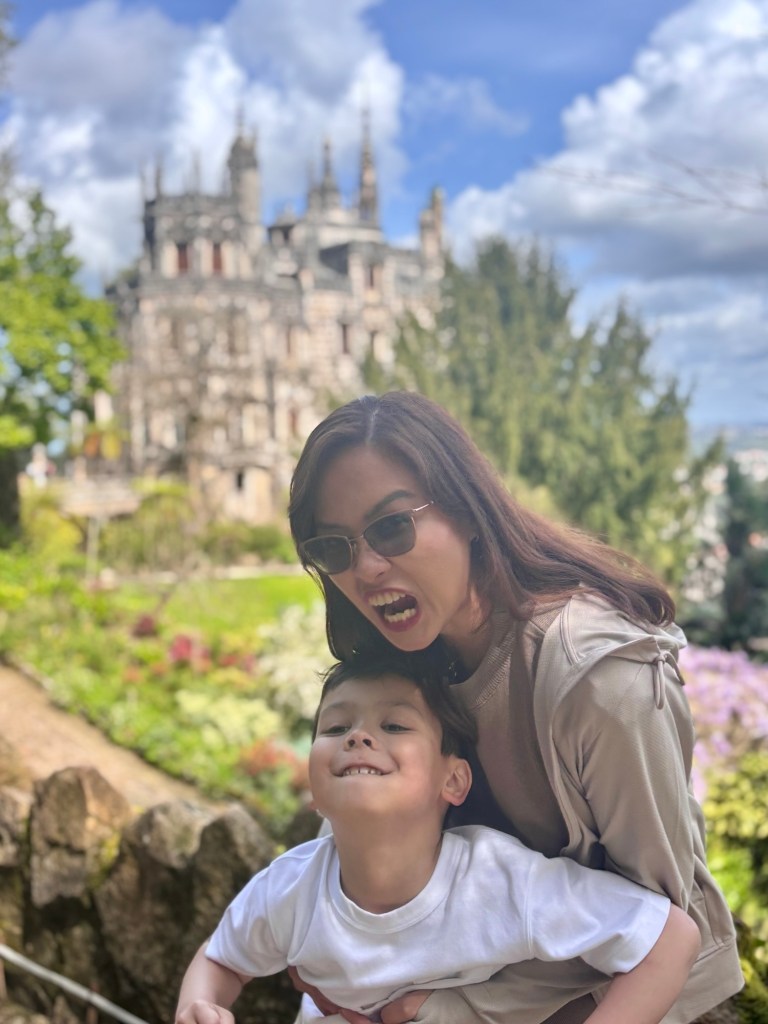
We found an almost magical, Romantic escape in Quinta da Regaleira, a UNESCO World Heritage Site in Sintra found in only a 30-minute ride from Lisbon. You can spend a whole day contemplating its many details, nooks and crannies, while appreciating the lakes, fountains, and forestry. The Labyrinthic Grotto, Initiation Well and the Fount of Abundance were some of my favorite sites.
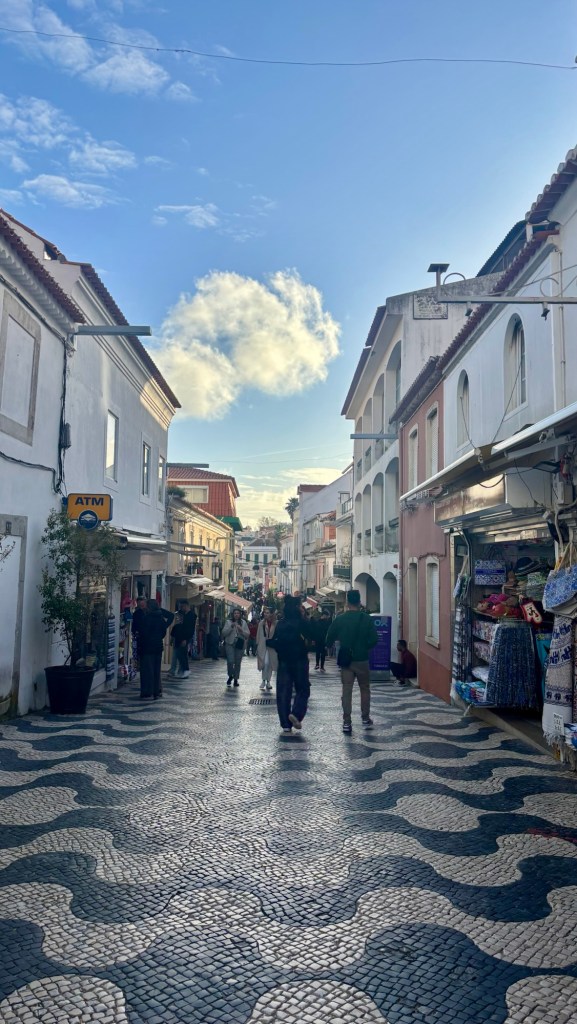
For a summer vacation, I imagine many locals and Europeans flock to Cascais, a seaside municipality that’s also 30 minutes away from Lisbon. But even with the chilly weather when we visited, we saw a lot of people sunbathing in bikinis by the beach (while we were personally freezing).
Some people say the vibes feel like visiting Monaco, or even Los Angeles, with the low-set buildings, many pedestrians, and beachfront shops.
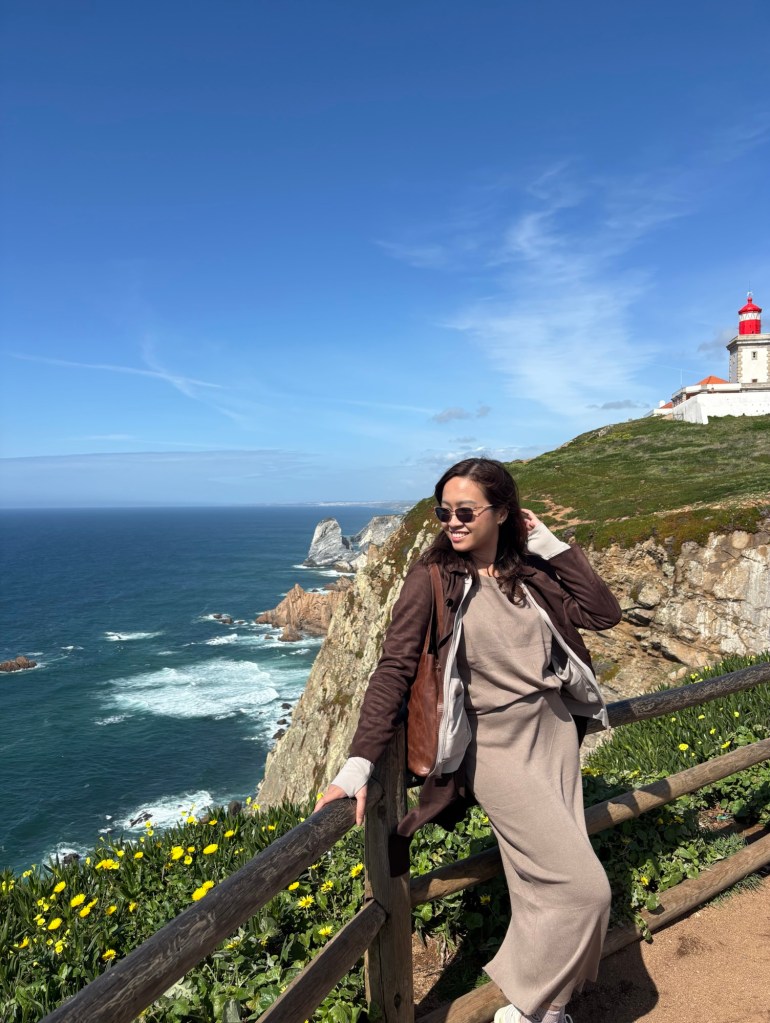
Only a few minute away from this charming town and its beautiful beach is Cabo da Roca, the westernmost point of continental Europe. The strong winds against the endless sea —and it gives me chills just to think of adventurers and merchants and colonizers sailing through during the Age of Exploration— paired the beautiful wallpaper-perfect lighthouse and fields definitely made for a memorable experience.
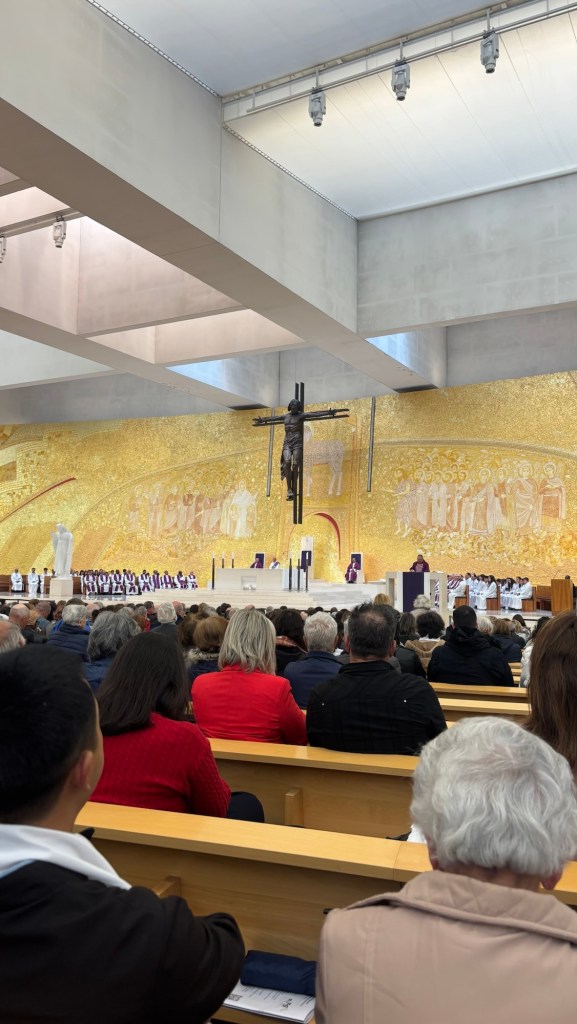
For our second day, we started with a visit to Fátima, one of the most famous pilgrimage sites in Europe. Known for the Marian apparitions, there were naturally many monuments and markers to the three sheperd children. Unfortunately, the weather wasn’t cooperating as much. We spent only enough time to hear mass and see some shops. Thankfully, the intense rain was warmed by the modern church’s beautiful gold details and the strong fires for candlelit prayers.
One of our last stops was Óbidos, a preserved medieval walled town in central Portugal. It’s located around an hour from Lisbon. With its cobblestone streets, whitewashed houses, and small bookstores, it’s another good option for a relaxing few hours.
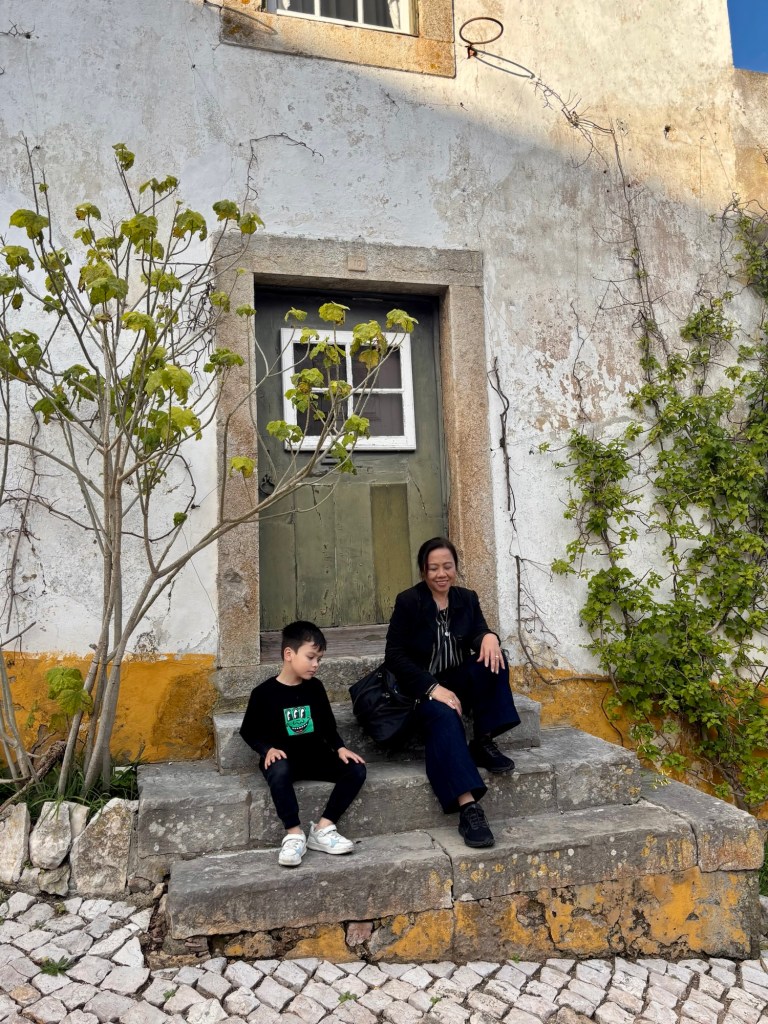
We even got there in time for a chocolate festival, so we enjoyed some sweet snacks on top of their famous ginja (cherry liquer).
Culinary stops, ft. codfish, pastéis, and more
My two trips to Portugal felt like an introductory course to Portuguese cuisine —which again, I’ve never really considered before April 2025. But now that I’ve had a taste, I can definitely recommend it. Fresh catch-of-the-day seafood, varied flavors crossing the Mediterranean and the Atlantic, and all at (mostly) reasonable price points.
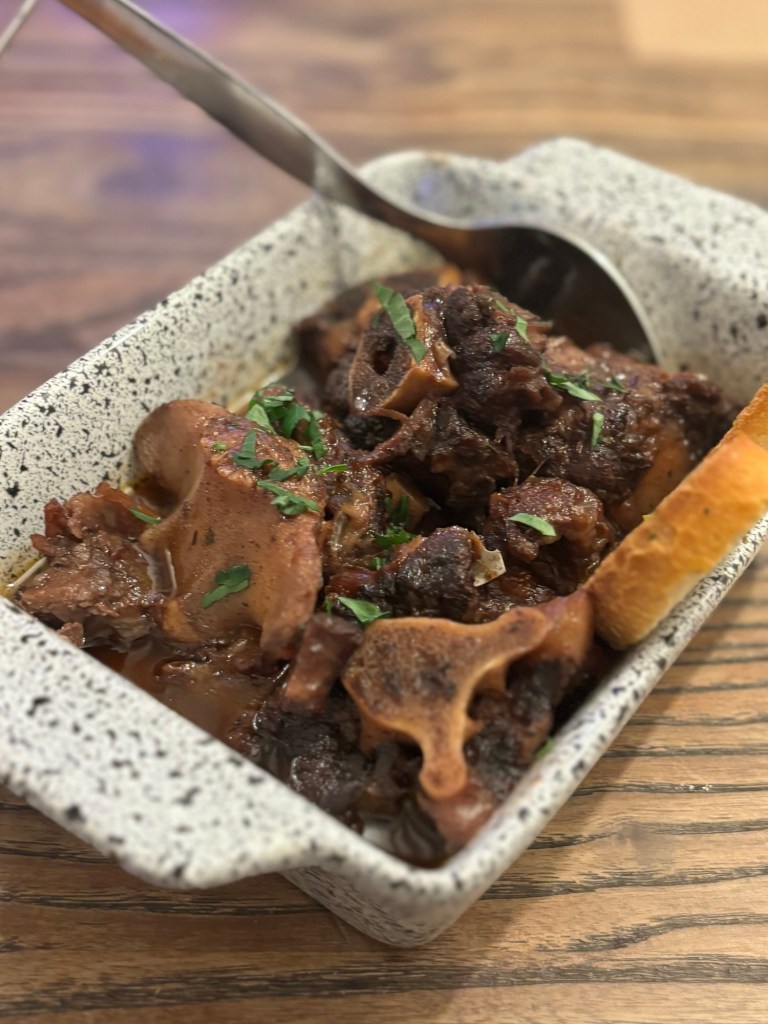
Some of our more memorable dishes:
- Polvo (octopus) at Palacio Chiado
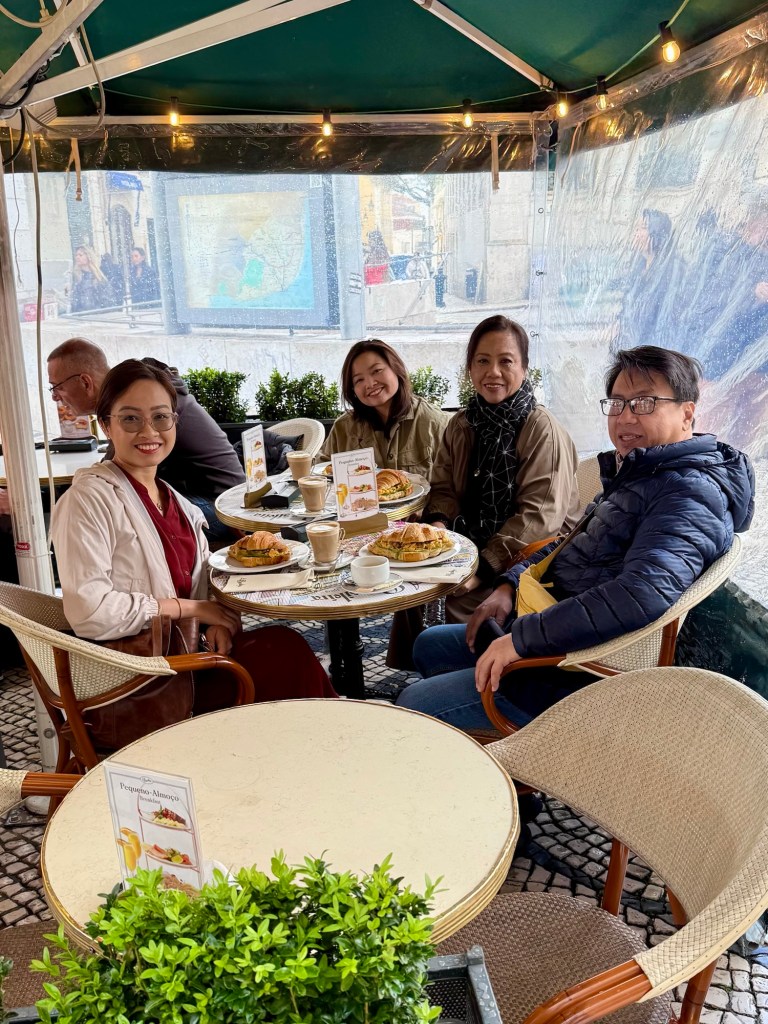
- Croissant Recheado (stuffed croissant) at A Brasiliera
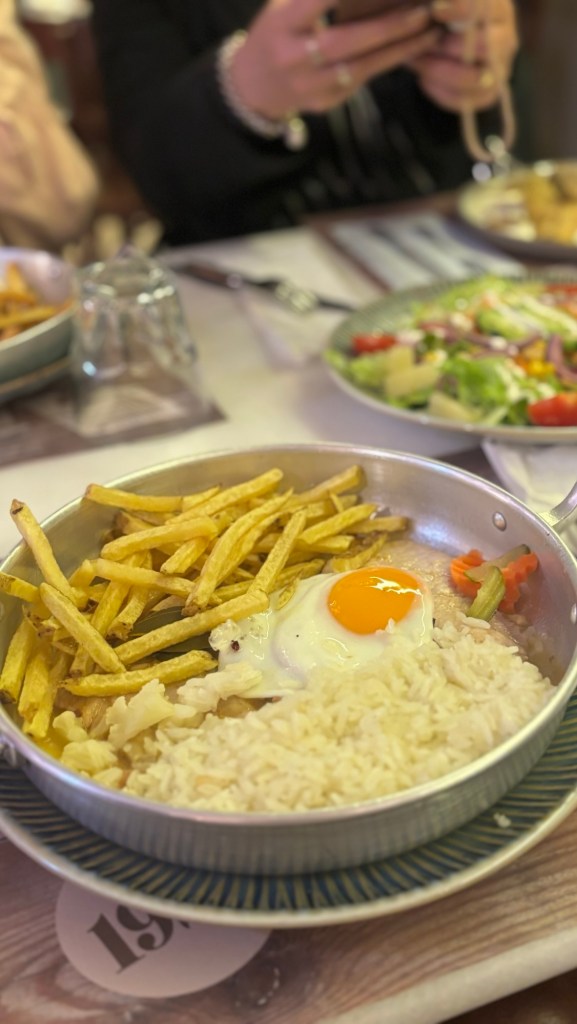
- Bitoque de porco (Portuguese-style pork steak with fried egg) at Apollo Cafe
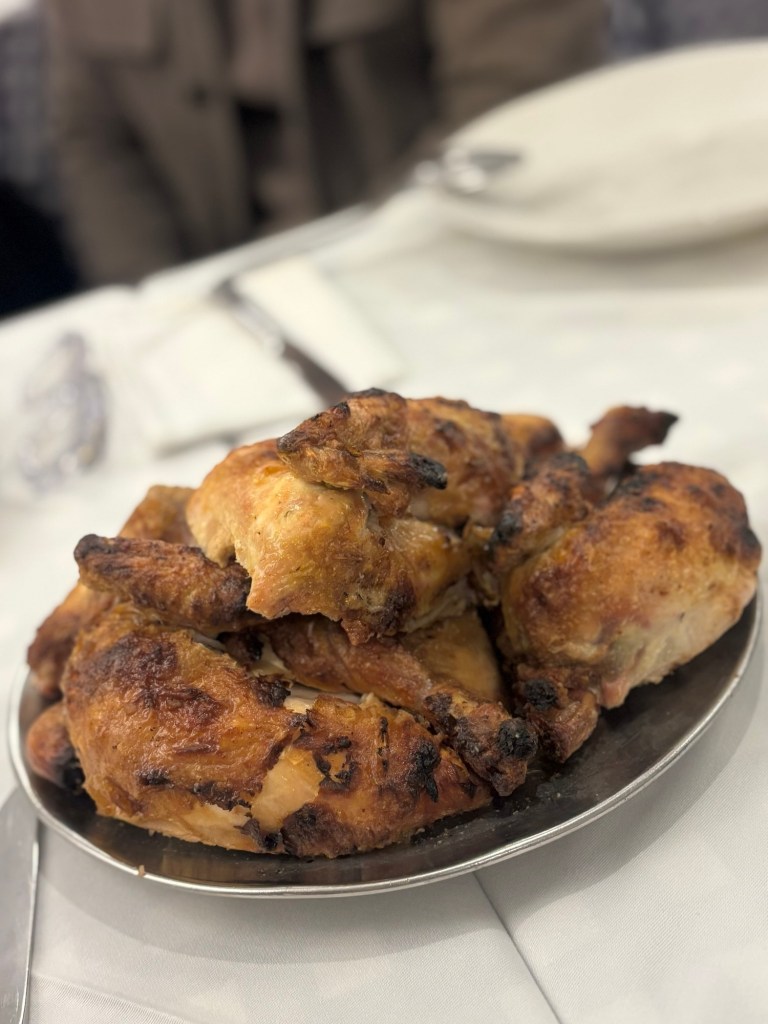
- Chicken at Bonjardim
- Codfish Sandwich at Chef Susana Felicidade (Time Out)

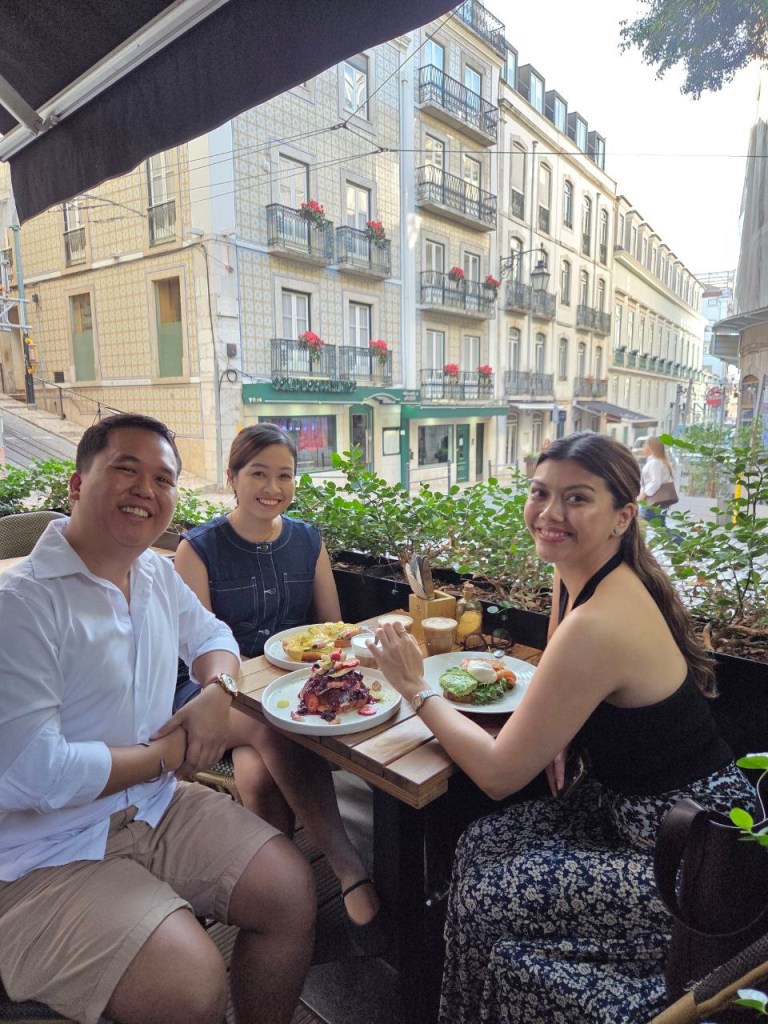
I’m not sure when next I’ll find my way back to Portugal, but I’m definitely looking forward to visiting again. From the ever-evolving variety of delicious dishes, to the many museums I still haven’t visited, I still have a lot left in my Lisbon list. Not to mention Porto, an entirely different but equally well-recommended city.
Note to self: Leave some extra baggage allowance for the next Zara haul.
P.S. Notes on WONCA World 2025
I went to Lisbon last September for WONCA 2025, the global conference of family physicians and general practitioners. We spent much of our time also promoting WONCA Asia-Pacific Regional Conference 2026, which was successfully hosted last March in Iloilo City.
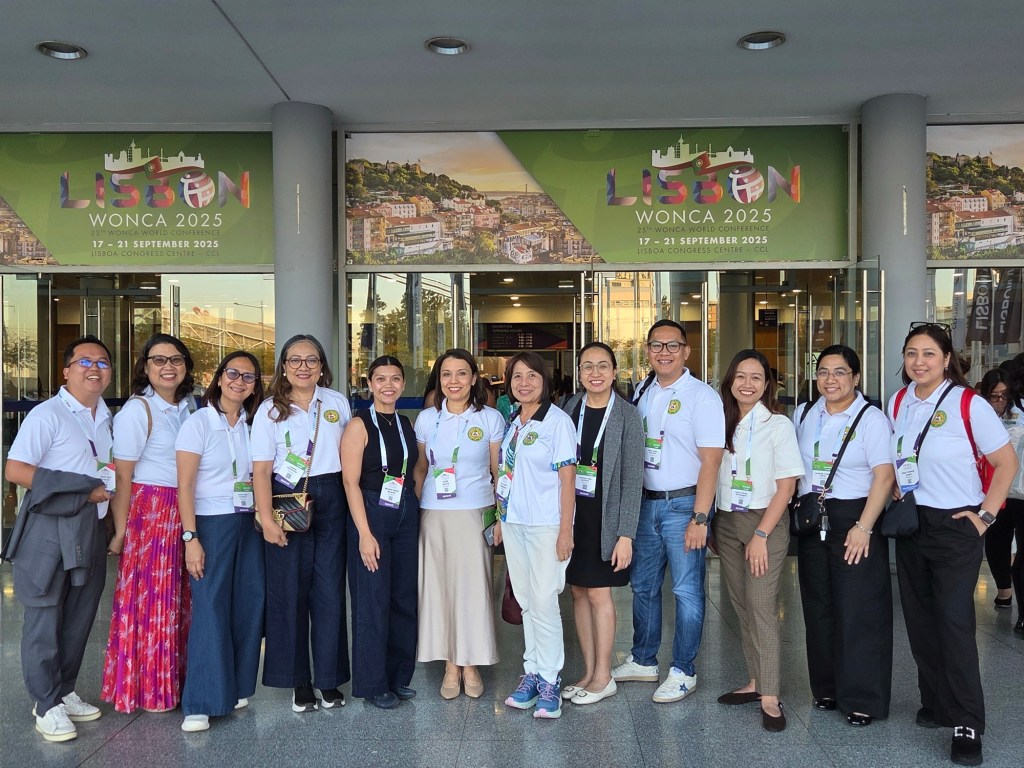
Aside from attending sessions, I gave an oral presentation on our research on our country’s budding universal health care-driven outpatient benefit package, as well as our research protocol on the baseline family profiling of our orthogeriatric fracture patients (and we are still ongoing data collection for this one, which is kinda delayed and also crazy).
See a list of my publications here — For Patients and Partners in Care
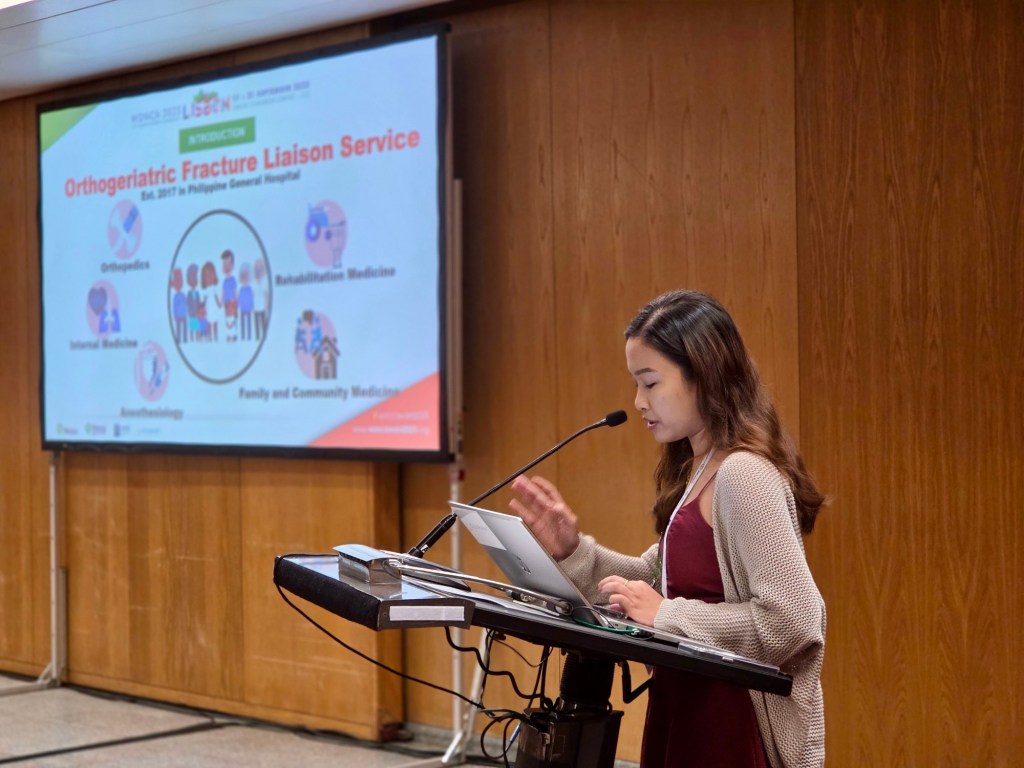
Here’s to more research, more travel, more good coffee! And also to the next post in my never-ending travel blog backlog (next destination: Barcelona).
Until next time! ♥︎


Say something back.