.
In this career-related blog post:
👉 Going out to the community to see patients, meet with peers, and practice health where the people are
👉 Wondering where did the time go
For more posts on residency, follow this tag here.
Finally outside #NotInPGH

Currently, the PGH Supportive, Hospice and Palliative Division offers home visits and associated services –assessment, symptom management, psychoeducation on care, patient and family counselling, and more– to patients living within a 10-kilometer radius of PGH. Visits are scheduled and coordinated beforehand. Patients who would require support but are beyond the scope of PGH are encouraged to engage their local health providers. The Ruth Foundation provides home visits in the urban south.
The ideal world operates with what is known as community-based palliative care, for patients who would prefer to stay at home for their palliative and hospice needs, however long that may take.
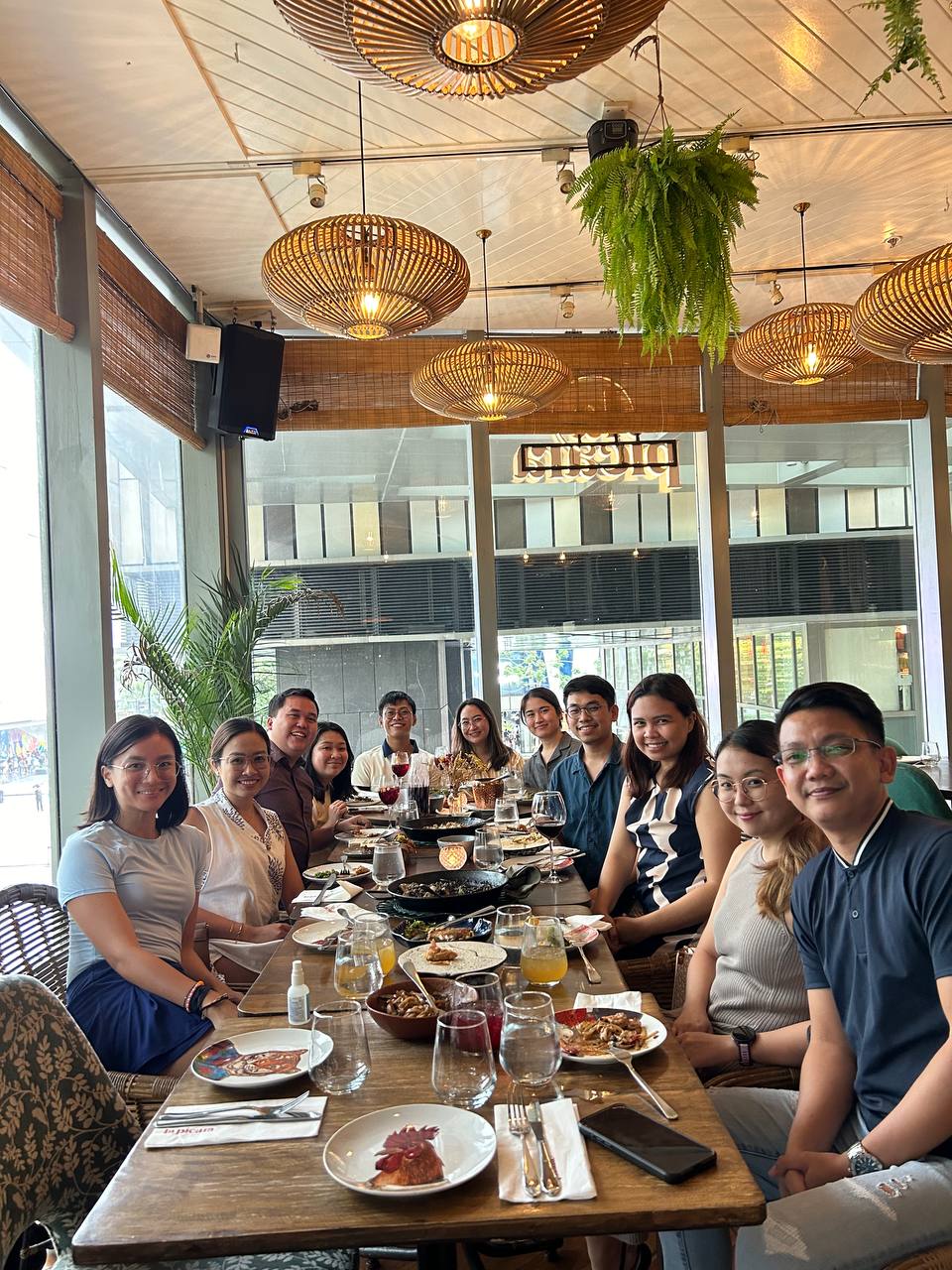
During our national convention for the Philippine Academy of Family Physicians last May 2024, I had the chance to briefly meet the current MHO of Nagcarlan, Laguna (yes, small world). Dr. Alvin Michael M. De Luna sat as one of the panelists in a discussion proving the concept of continuity of care, but specific to stroke –from acute stroke management under the neurologist, to palliative care during the adjustment to outcomes phase, and finally to the community.
Read here: from womb to tomb (and the before, during and after of compassionate care)

.
The PAFP 61st Annual Convention marked my first full-fledged convention experience as a family and community medicine practitioner. My previous trip to Davao for the mid-year convention was cut short because of a pesky flu (I’m still thinking that was some kind of hormonal imbalance?). I enjoyed the privileged problem of choosing which session to attend and which booths to visit.
Read here: Davao City 2023 – Life is Here
Thank you to my preceptors in GP OUT for allowing me to attend the full three days of the convention. My next convention experience will hopefully be WONCA APR 2024, or the Asia-Pacific Regional conference of family medicine doctors. It will be held this August in Singapore. Here’s to hoping I get to submit my poster by the end of this month!
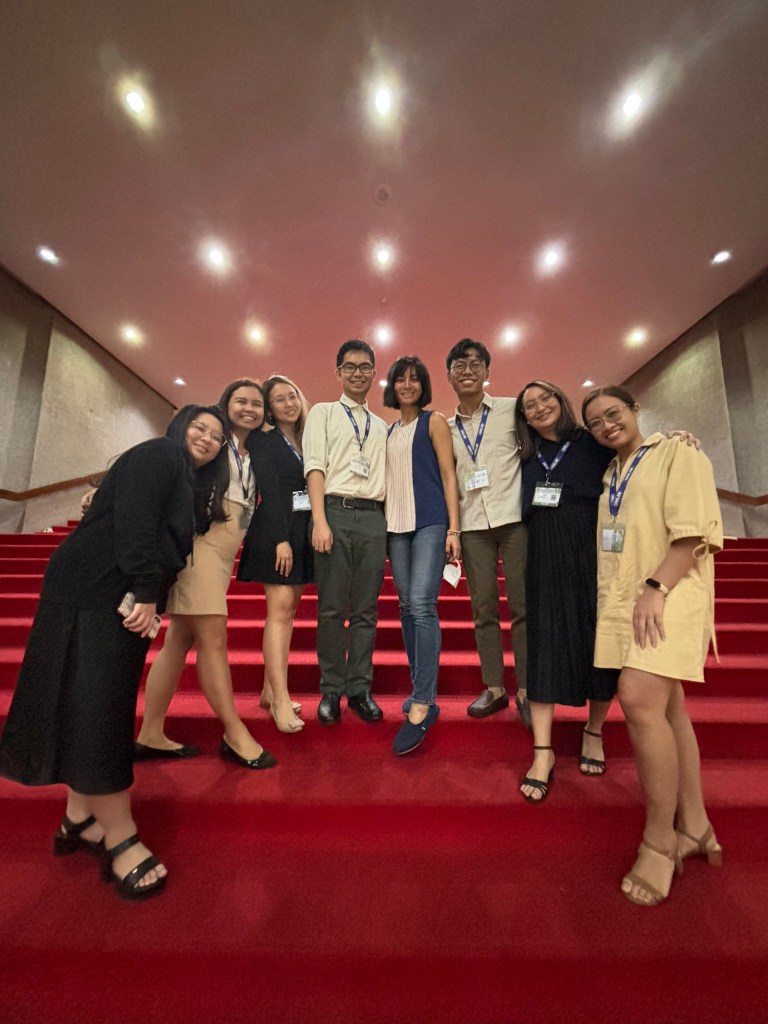
Here with Sinag in PICC, as always.
.
Going out of PGH in a professional capacity allows us to meet people who we’d otherwise never meet, probably. Sometimes we meet people in other health-adjacent sectors, or families and friends of our patients, or even complete strangers. This time the most impactful interaction was seeing the many different faces of the PGH DFCM alumni.
It’s humbling and exciting to think that family medicine truly started in PGH, and the department continues to be a leader in the new fields of FCM as the years progress. We’re about to celebrate our 50th anniversary next year (a truly daunting prospect). The men and women in this picture are pioneers of the practice!

.
Visit our Page: UP-PGH DFCM Postgraduate Course

Writing this now, a few days into July, I’ve had several people say I look like Dena. Part of me is flattered, another part of me is thinking this might be profiling (tattooed eyebrows + morena + same-shaped eyes + medium build), but another third is also some people forgetting that I’ve replaced Dena as the resident rotator in Ternate. E.g. “Siya po kapalit ni Dena?” “Kapatid?” –HAHA!
Aside from attending the national convention in March, I also went out to serve and learn in a small family-owned clinic in Pila, Laguna. This was a required outside rotation, with a focus on private practice management.
Evangelista Medical Clinic (EMC) believes in healthy life, happy life. It reflects the community of care that Dr. Rolando Evangelista, previous MHO of Victoria, built for decades with his patients from all over Luzon. Unfortunately, he passed away in 2021. But he is succeeded in spirit by family medicine doctors and relatives-slash-staff who believe in his brand of care. His nephew, an orthopedic surgeon, also sees patients in the clinic. As an accredited PhilHealth Konsulta package provider since 2023, EMC now offers discounted diagnostic tests in partnership with a nearby laboratory.
At the end of each month, EMC also hosts a “Magtanong Kay Dok” health and social education session via their online page. Tune in when you can!
Follow for more updates: Evangelista Medical Clinic on Facebook

Thank you once again to Tita Dolly, Ate Attan, Ma’am Guia, sir Reymond, and the whole extended family for welcoming me into your home.
.
The commute from Manila to Laguna –a jeep ride (or long walk) to Buendia-Gil Puyat, then a 2-hour bus ride to Pila– make me think of my clinic patients who prefer to travel from Laguna to Manila for their usual consults. At that time, my commute cost around 200-220 pesos, or a total of 400 per day. For senior citizens, that would be around 320 per day.
That amount of effort to see your doctor is extraordinary. And it’s not because the doctors in PGH are magical and able to perform miracles. Whenever I probe my patients why they choose to consult in PGH despite the distance and the torture that is our public transportation system, these are some of the things they’d say:
- PGH (specifically family medicine) doctors are better able to explain and address patient needs, instead of other doctors who reportedly just ask few questions, don’t perform physical examination, and hand over the prescription and invoice. In other words, the trouble is sulit or worth it because of the quality of the consult.
- There are no alternative public clinics closer to their home, to the point that a 3-hour commute is deemed more accessible. If there is a public clinic, the schedule of consult is unpredictable. Doctors may or may not be available. However, I’ve also noted that some patients haven’t even tried consulting at their LHC, and are basing off of their own preconceived biases.
- They are “laking PGH” (grew up with PGH), and they take some pride in that, or maybe some comfort that prevents them from branching out or back to their communities. Some may say that their records are in PGH, so they’d prefer continuity of care.
Increasing availability, accessibility, acceptability, and adequacy of medical services, such as primary medical consultation, is increasingly and evidently no longer just a health problem. Maybe it’s because I’m writing this blog post in the early days of my rural community rotation in Ternate, but the roots of health stem from intersectoral development –or lack thereof.

.
For the months of April and May 2024, I was still #NotInPGH thanks to my elective rotation in AIHO (which I couldn’t write much about) and in primary care obstetrics in the urban community.

But I confidently made my way home from Tondo Super Health Center throughout the month, thanks to the universe.
.
Tondo Foreshore Health Center and Lying-In Center is the image of an ideal local health center. Most medical services are available, e.g. doctor’s consultation, health risk assessment, dental care. Basic laboratory tests and common medications are also well-stocked, and the center also comes with a tuberculosis treatment facility, a functioning animal bite center, a robust family planning program, and finally the lying-in clinic. The infrastructure is also no joke, and provides for a comfortable patient experience (except for the dedicated waiting area for family planning/pregnant patients, which was non-existent at the time of my rotation). But the good bones are largely thanks to the center’s partnership with SM Foundation as well.
The goal is to really have most health centers standing and equipped to a similar level. It should become so common that we don’t even have to call Tondo Foreshore a “super” health center. Through the years of my rotation in the Manila Health Department, I can say that it’s still far off. Many of the promises I heard in first year are still promises today. But there has been progress! For example, many local health centers now utilize an online appointment system, which facilitates better management and resource allocation.
Visit here (for a patient appointment in Manila): https://manilahealthdepartment.com/

Getting through the rotation was only possible with the welcome of the midwives, nursing aides, and physicians-on-duty. I’d like to especially thank Ma’am Nancy, Ma’am Veron, and Ma’am Imelda hehehe, and also Dr. Trinidad from the LHC. I also co-rotated with two reliable and bright UST interns (they’re sure to go places)!
.
Until last month, I was still mostly #NotInPGH. Advocacy rotation is mostly remote work, and this also meant that I was first in line to be volunteered for events outside the hospital.
We participated as screeners in a blood donation drive in Mendez, Cavite. Then Trisha and I headed to Cavite (a post for another time).

This was meant to be a giant blog post covering the highlights of the last few months. I want to celebrate and reflect as the end of the year approaches (and as the end of my residency comes to a hopeful close). It’s crazy to think of these moments in perspective. Where did the time go?
Read the near-beginning: FCM Residency: Six months later, older, and hopefully wiser
In the first year of family and community residency, around half the year is spent in the outpatient department or family medicine clinic. Non-urgent consults are our bread and butter, which is why our duties are also served in the ambulatory care unit. We also spend 1-2 months in the urban community.
In the second year of residency, we spend only four or so months in our home outpatient clinic. The rest of the time is spent on special rotations, many of which are admitting hospital-based specialties (e.g. palliative medicine, toxicology).
For our final year, we spend even less time in the outpatient clinic —minimum of 2 months only, with a focus on the administrative component— and now more time in the community. I’m now going onto my third week out of twelve in Cavite. ☀️
Our deadline for our research requirement is at the end of August —already next month!— and prospective graduates traditionally march sometime in early December. Days are becoming shorter and shorter.
My writing schedule is currently volatile and very sensitive to enegy changes; I’m currently very tired and busy here in our community. But I hope to still chronicle more of my remaining days as a trainee.
Up next on blogging residency (hopefully) ▶️ Growing through mentoring, and clinical/management milestones.
Until next time! ♥
 jari m
Say something back.